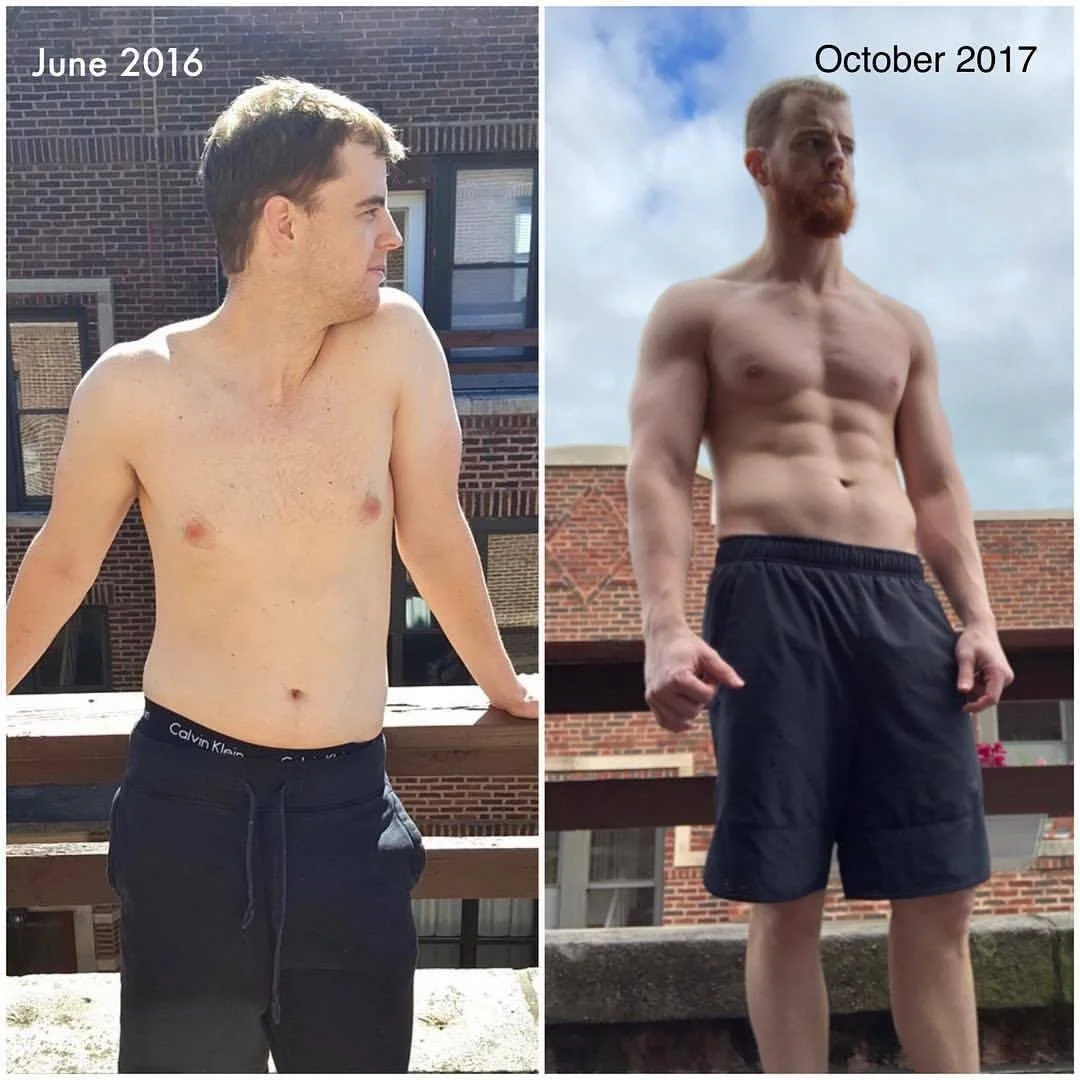
Welcome to my n of 1 attempt to write the last article about getting in shape you read. About me; I am 34 with some injury experience. The photo to the left is of me a little over a year ago. Not included in that picture is the week where I was unable to tie my shoes or the six-month recovery from a herniated disc that required two epidural injections.
My first bit of advice on your fitness journey is to be reasonable about what you can lift, especially when it concerns compound movements. This article is an attempt to aid you in creating your first workout routine, whatever you may be going through that is pushing you to pursue it. I am not going to tell you what to do. I am going to tell you how to figure that out yourself because we are different.
Our First Difference:
What or Who Do You Want to Look Like?
Find the person, or type of person, whose body you most want to emulate. What do they do to get their body shape? Does any of that interest you? When looking for information, try to find it from people you want to look like.
I recommend not buying any products they sell. Remember, you can accomplish a lot on your own, buying equipment or product that doesn’t suit your lifestyle is only aspirational, not actual fitness.
I wanted to build a gymnastics body, so I started my journey by unfollowing all my friends on Instagram and began following only gymnastic Instagram accounts. I got this idea from Noah Kagan. I was encouraged to go further into gymnastics training via an interview with Christopher Sommer and eventually attended a gymnastics open gym for about six months and am looking forward to returning this summer after taking a break to work on the muscular and postural weaknesses I discovered while training there.
Our Second Difference:
What is Fun for You?
You are going to hate working out. Admit it. To fight the potential monotony of exercise, I suggest you find some fun to add to your routine. Whatever this is, add it to your daily checklist of exercises, it is just as essential to your success.
Fun can be fifteen minutes in the steam room, time with a workout buddy, or a game of basketball. Fun can be a conversation with someone random — the trainer you think is cute or the person who does their squats wrong. For me, it was handstands and then handstand pushups. You don’t need to limit yourself, but remember to take five to ten minutes during every workout and have fun!
Our Third Difference:
Why Are You on That Phone?
A large music playlist has always been essential. However, beyond that, your phone will only prevent your success in the gym. Today, I saw someone look at their phone twice taking one drink from a water fountain.
Your friends will be there when you are done.
Your family will be there when you are done.
Your job will be there when you are done. If it is not, you can start looking for another job when you are done.
Our Fourth Difference:
Can You Go and Change Yourself on Repeat?
Figure out what works best for you during your first week. What do you like about your workouts? Where do you see the most improvement? Choose a muscle group/area to improve.
Get on YouTube to find advice that targets your selected area. It can be a body part you like or something you want to improve. Your choice. Spend real time (months) learning about that area. Once you feel comfortable that you understand that area of your body, pick a new area. You will never be done learning about fitness, so expect to revisit what you learned for review.
If you do not know where to start, I would recommend Jeff Nippard or Stephanie Buttermore. Their content is accessible and full of practical detail. Jeff Cavalier is a good addition as you begin looking for additional workout options and more technical advice. These are simply the channels that I have used and are not an exhaustive list of the options available on the platform. If you prefer Instagram, I have been enjoying moveu_official.
The human body does not change that much. This is why I discourage reading about fitness as you start out. The internet is awash with new and improved when there is still no replacement for attendance.
Our Fifth Difference:
When to Read — Can You Forgive Yourself for Never Knowing Enough?
Getting in shape is a marathon. Just keep going. When you injure yourself, it is important to take a break, but only to go to a medical professional, or perhaps even do your own research about the specific area you injured. You should still see a medical professional, in person, before you return to a full workout regimen after an injury.
If your injury or setback is not simple (see: a physical therapist cannot help you fully recover) you may need to start reading again in addition to seeking out a doctor. Remember that if you are in a specific position for most of your day (sitting,) there are real exercises you should pursue to counteract your posture.
In addition to the cortisol shots I received from Northwestern Medicine Spine Center, an article about the state of medical science concerning recovery from a back injury eventually helped establish a move-on mindset. Recognizing my changing body, as the article discussed, was the biggest step in allowing me to abandon my previous workout’s squat and deadlift failings. These exercises do work, but they do not work for me. Finding out what does not work for you is just as important as discovering what does.
Our Sixth Difference:
Can You Ask Questions of the Professionals in Your Life?
A few months before writing this article, I threw a dodgeball, and pain shot up my arm, settling in my right shoulder blade. During the course of writing this article, I began a recovery process that only now feels manageable. Dry needling has been essential. The discussions with my PT surrounding the causes of my shoulder/back pain were vitally important as well.
Tailored-to-you medical/workout advice will always beat a YouTube video.
Diet matters too and you should consult a dietician if you think you need to learn more. Diet will be the most important thing to learn as you develop a routine that meets your goals. My recommendation to start, find a diet that you enjoy at some level that is high in protein.
As you are figuring out your style of working out, always respect other variations of exercise. When a workout plan or diet does not work for you, that will not mean it is wrong. You probably just do not know enough about it.
My N of One Five-Month Guide
My most recent major injury came as a result of throwing a dodgeball. Details aside, I will update you on May 31st, because yes, it is as easy as I say it is above.
But you have to show up. That is the hard part.
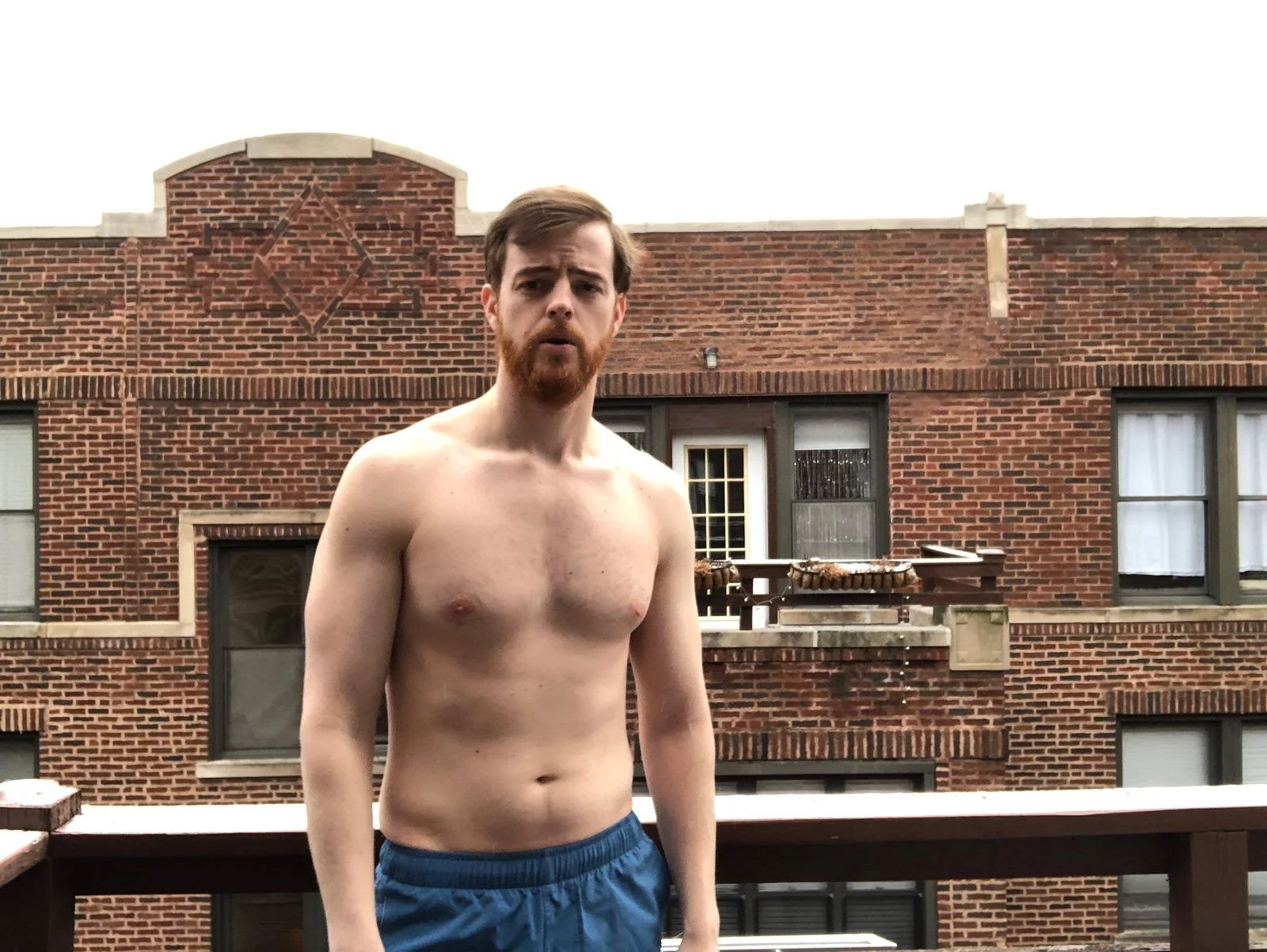
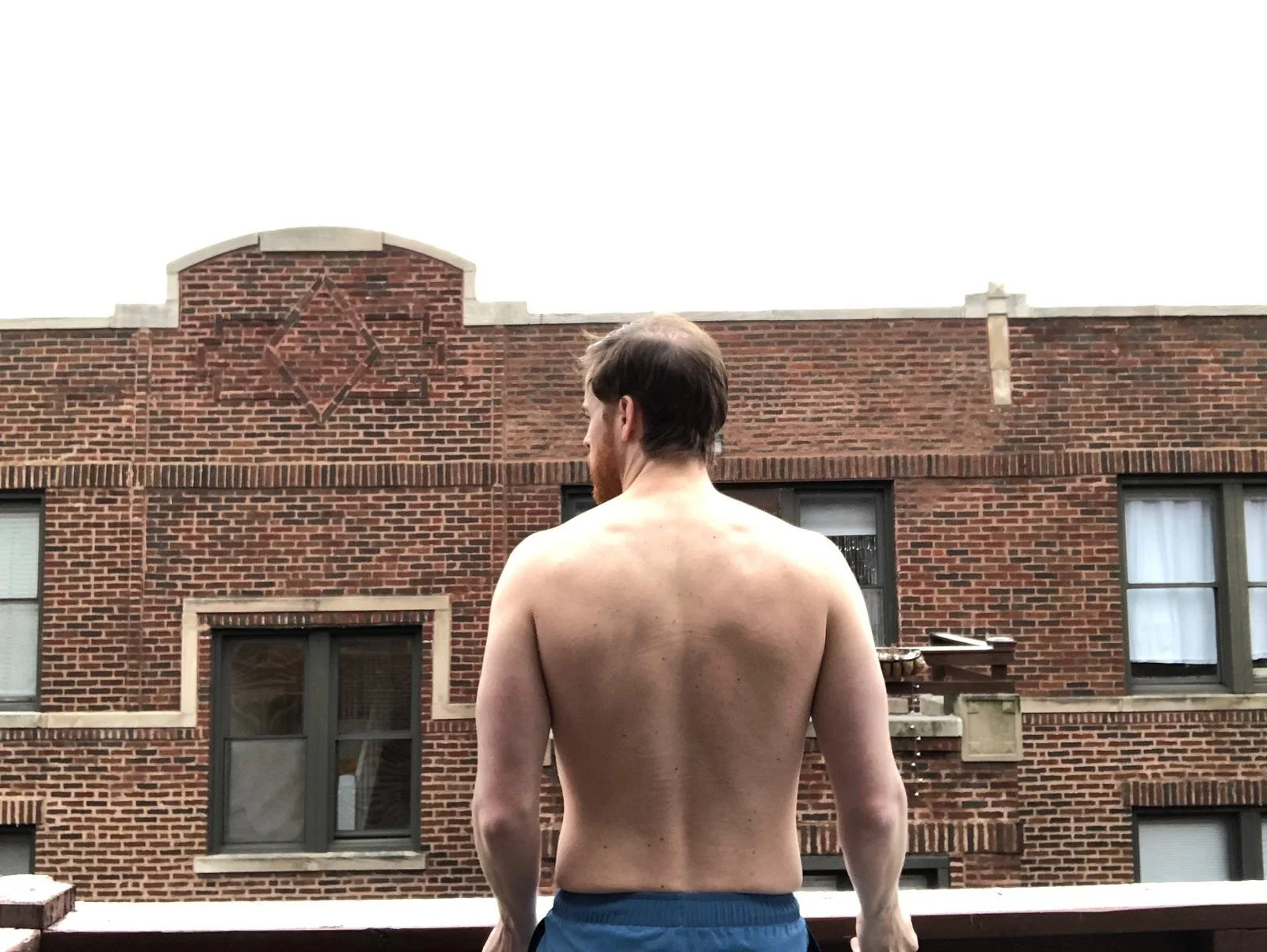
Here I am after my first workout back on the morning of January 1st, 2019:


1 Month Update:
Biceps, Back, Legs have been my focus. My shoulder injury has gotten significantly better as a result of some dry needling with my physical therapist and I am back to practicing full handstand pushups again. I started out with a light-to-no-weight routine that covered my entire body, emphasizing range-of-motion and control. You will be surprised what a lot of no-weight lunges with a controlled and full range of motion can do for your legs.
If you are looking for simple recommendations on diet:
- More Protein is Better
- Stay Away from Processed Foods
- Take Supplements: I take 5 Citrulline Malate and 2 Kre-Alkalyn pills 30 minutes before my workout. I take 2 Kre-Alkalyn pills after my workout. There are a variety of different catch-all supplements, I use Athletic Greens. (You can find these products on Amazon)
Timing doesn’t matter that much long-term — but I also keep a supply in my gym bag just in case. Citrulline Malate is an amino acid that acts as a natural pre-workout while Kre-Alkalyn is a variant upon creatine as discussed by Jeff Cavalier — do not do more than the dosage he recommends, it will screw up your kidneys.
2 Month Update:
Just in time for what should be my first break I caught the flu. While this is not ideal, it can happen to you. Do not be discouraged. Ideally, this break would not be induced by sickness, but here we are.
You should take a break if your workouts do not feel productive for a week plus. This should last somewhere between three to seven days — but watch your body. In my experience, a break of a few days will do wonders.
If your routine is not working for you, change it. I eventually moved my workouts into an upper-lower body split, but quickly transitioned into a Legs — Back/Biceps — Chest/Triceps split.
I will start cutting in a few weeks — depending upon how well I recover from being sick — if you get sick, just make sure you eat enough protein and fats. If you have not cut before — you really will need to take a full accounting of everything you eat. Figure out your macros. The tools I’m linking to don’t matter — online they are all essentially the same. Don’t feel the need to track yourself beyond a few weeks if you have a relatively consistent diet. Do feel the need to track yourself if you do not have a consistent diet.
3 Month Update:
By now you should have started to cut, which means you’re probably a bit more irritated than usual — remember that you might be more irritated because you are hungry in your daily life. I’ve already excised about 500 calories a day from my diet and am monitoring my body weight and composition. One ‘trick’ I find useful for fighting hunger is to drink a lot of water.
If you struggle with hunger, try intermittent fasting. Do remember what your goals are while you do this work. Protein intake is still the most important thing to focus on. Good luck!
I do not recommend metrics beyond checking your weight or BMI unless you have something medical you are monitoring — it is my opinion that performance metrics are essentially useless if you just want to get ‘in shape.’ They are important to professionals in the fitness industry, but they are mostly distractions for you.
This ‘ignore the numbers’ mentality applies to the weights you use working out as well — the only metric that matters is your energy leaving workouts. Your muscles should feel sore and you should be tired but not in pain.
Try to accomplish this feeling every workout if you can.
If that is not the case, change something up:
- Your Workouts: Depending on where you are when you started this journey, you will find your body stagnating. This is how the human body evolved. No longer being sore at 135 on a bench press means you have gotten stronger. Try 145! YouTube is and will continue to be your friend in regard to new exercises or challenges for your body. Try something new! Feel how your muscles respond and ask questions of the experts available to you. Ask the same questions of YouTube — it is likely they have been answered there.
- Your Mindset: Fuck this, right? I have been there. It is one of the reasons I encourage you to find something fun to engage in at the gym. But even that fun can wear thin. Give in once a month. This can mean skipping your workout, having a bawdy night out, or a Ben & Jerry’s night in. Maybe you are in a place where this is three nights a month? Figure out that number and stick to it. Acknowledge to yourself that this was ‘your night’ to do this. If this happens more than your number a month, you will want to check in and figure if this routine fits in with the life you want to lead. If your mindset is not changed for the better after a few weeks, there may be other problems you need to sort out before you return your focus to your workout routine.
- Your Timing or Location: When and where are you working out? This is less likely than the other two to really step up your training but, you will be surprised how your surroundings change how much effort you put in. If you are a competitive person, going at a time when others are working out may motivate you. If you are not a morning person, then you may put out your best effort at night. Find out what works for you.
4 Month Update:
You cannot accomplish anything without the possibility of failure. The gymnasium is a failure apparatus. We work our bodies, minds, timelines, and relationships to failure when we attend.
But there is no feeling like being demonstrably better than you used to be. At some point, change and clarity will become rut and routine. Be prepared to fight this feeling with new workouts and exploration.
Remember to have fun.
5 Month Update:
Now is when you will be mostly focused on diet. It sucks. I stopped my cut early because it sucked. There is a point in time you will need to quit as your workouts will begin to suffer as your cut leaves you less energy. Avoid wearing yourself down too much, as your body will eat the muscle gains you have put on.
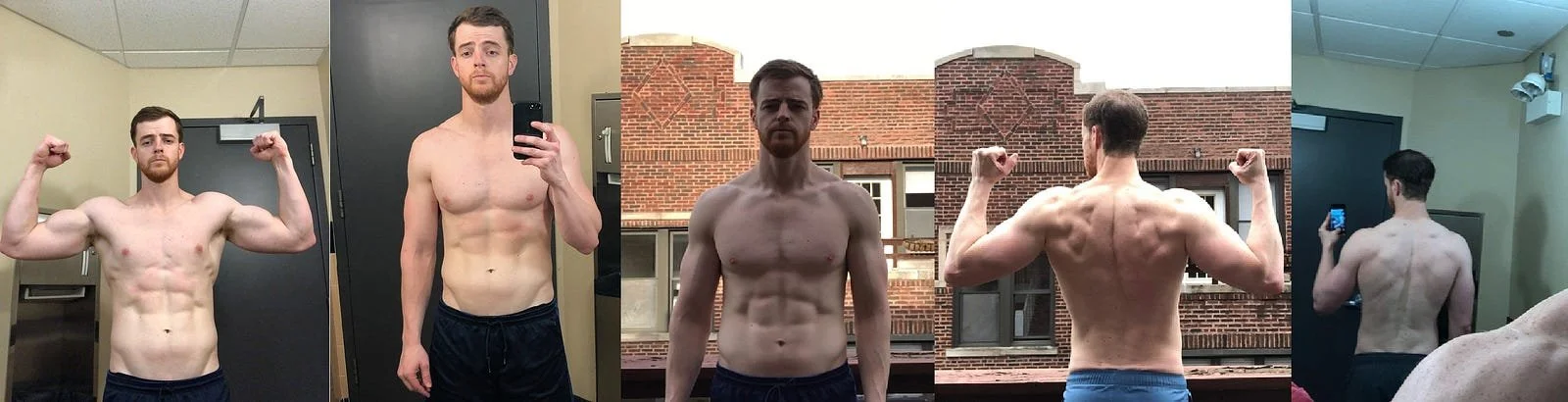
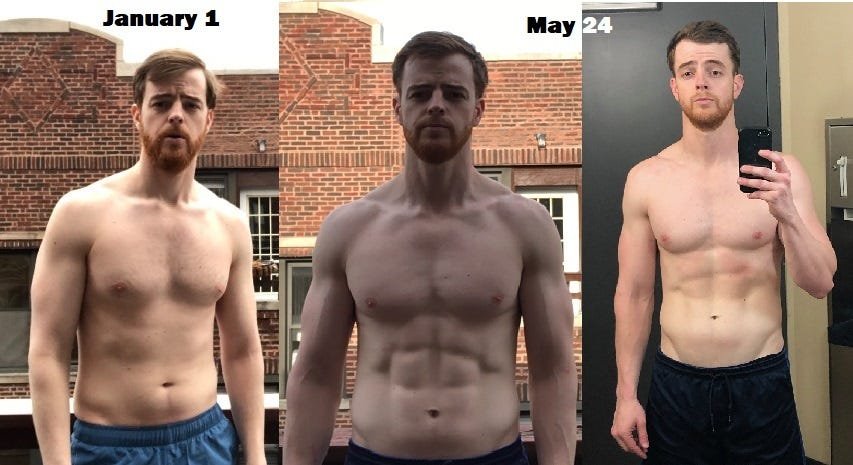
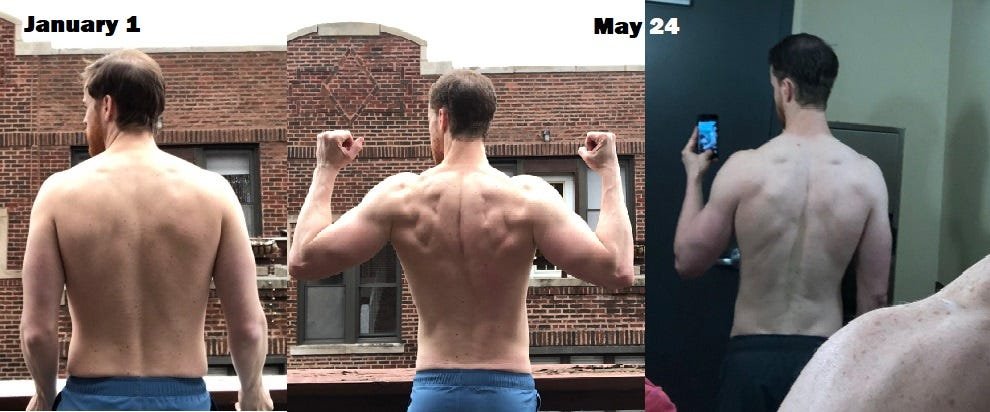
Thank you for reading this entire post!
Uncertain when to start? I started in January, but it feels like January somewhere, and five months on from now you will feel better because you tried yourself.
Originally published on Medium.