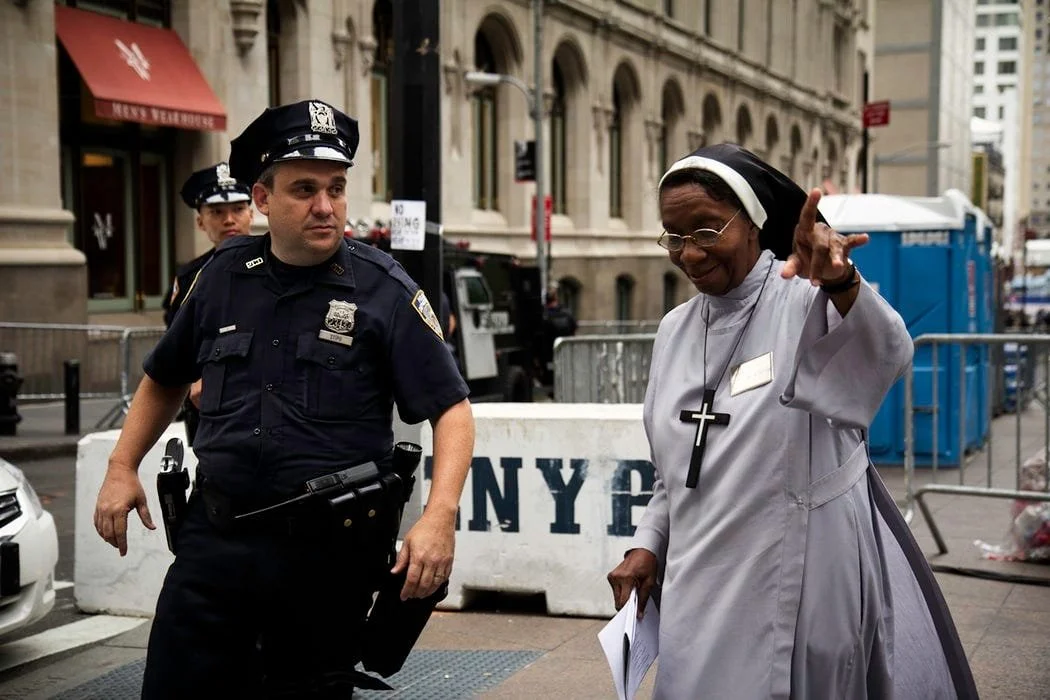
In Talking With Strangers, and per his norm, Malcolm Gladwell analyzes a motley crew of events, their players, and the requisite psychological underpinnings which may interpret them. Wherein the final product may convince “better” as an audiobook, Gladwell seeks to explain how Sandra Bland’s arrest on July 10th, 2015, would lead to her suicide three days later. Gladwell is explicit about the intent behind his first book since 2013’s David and Goliath stating his desire to reconvene the conversation surrounding Sandra Bland’s death and similar or related incidents of the past few years.
And can you blame him?
Few would have predicted the string of events that led to Bland’s death as a standard police stop rarely escalates into an arrest, three days’ incarceration, and suicide of the suspect. Gladwell sets out to show his reader how police officers pursue and escalate minor traffic violations stemming from training and a predisposition to doubt the authenticity of the strangers they meet.
“The lesson of what happened on the afternoon of July 10th, 2015 is that when police talk to strangers, they need to be respectful and polite. Case closed, right? Wrong.
By this point, I think we can do better.” — Malcolm Gladwell
If you watch the video of Bland’s arrest, you will see the perspective of Brian Encinia. The Texas state patrolman responsible for Bland’s arrest observed a disheveled interior of a car with Illinois license plates. He then attempted to judge a stranger’s dismissive attitude toward her responsibility to the law. During interviews that followed the event, Encinia would recall uncertainty regarding his first interaction with Bland, finding her suspicious. Encinia would eventually blame Bland, now dead, for the escalation of events.
While Gladwell gives his reader plenty of time to consider the officer, he also asks his reader to consider Bland. She is also familiar with the traffic stop as $7,579 in unpaid fines from various incidents have tailed her in moving from Chicago to Texas to start a new life back at her alma mater. Gladwell suspects Bland would have been spooked as Encinia sped up behind her on the freeway, which is why she moved over to let him pass. When his lights come on, signaling Bland to pull over, she should have been right to question what she had done.
As it would turn out, Bland’s immediate need to change lanes lacked a signal.
“Okay, Mamm… You okay?”
“I’m waiting on you. This is your job. I’m waiting on you. What do you want me to do?”
“Oh, you seem irritated.”
“I am. I really am. Because of what I’ve been stopped and am getting a ticket for. I’ve been getting out of the way. You’ve been speeding up, tailing on me, so I move over and you stop me. So yeah, I am a little irritated. But that doesn’t stop you from giving me a ticket.” — Encinia and Bland
Encinia would not have required much to pull Bland over due to the vast latitude granted to police for moving violations. This leniency first proved essential as administrators scrambled to lower urban murder rates in the early ’90s. Gladwell points to the success of the Kansas City Gun Experiment as essential in understanding the historical basis for the aggressive policing of moving violations. The experiment was conducted by four police officers over 200 days wherein violent crime in Kansas City’s 144th police reporting area halved while nearby districts remained flat.
The four officers also issued 1,090 traffic citations.
Gladwell asks the reader to consider how police officers are trained to act when issuing these citations if the goal is to reduce violent crime.
Gladwell points to Charles Remsberg’s Tactics for Criminal Patrol: Vehicle Stops, Drug Discovery and Officer Survival, which suggests how best to approach a traffic stop, especially if the goal is to “turn ordinary traffic stops into major felony arrests of drug couriers, gun traffickers, and other violent criminals.” Remsberg suggests a patrolman should look for any sign that an individual is not responding to their questions honestly and determine how they can extend the conversation by looking for holes in the stranger’s story. He also discusses the popular Reid Technique — a questioned interrogation strategy taught throughout America. According to the technique, a suspect’s body language will shift away from the officer. They will avert their gaze. They will stammer in explaining themselves.
To a trained police officer, the early stages of a traffic stop are a discovery process. Anything deemed out of order or unusual might make more sense as evidence upon the stranger’s future arrest. If the suspect is innocent, they will prove it through their behavior. Gladwell points to multiple instances where Encinia could have defused the situation with Bland, he instead chooses to see her as a dangerous stranger.
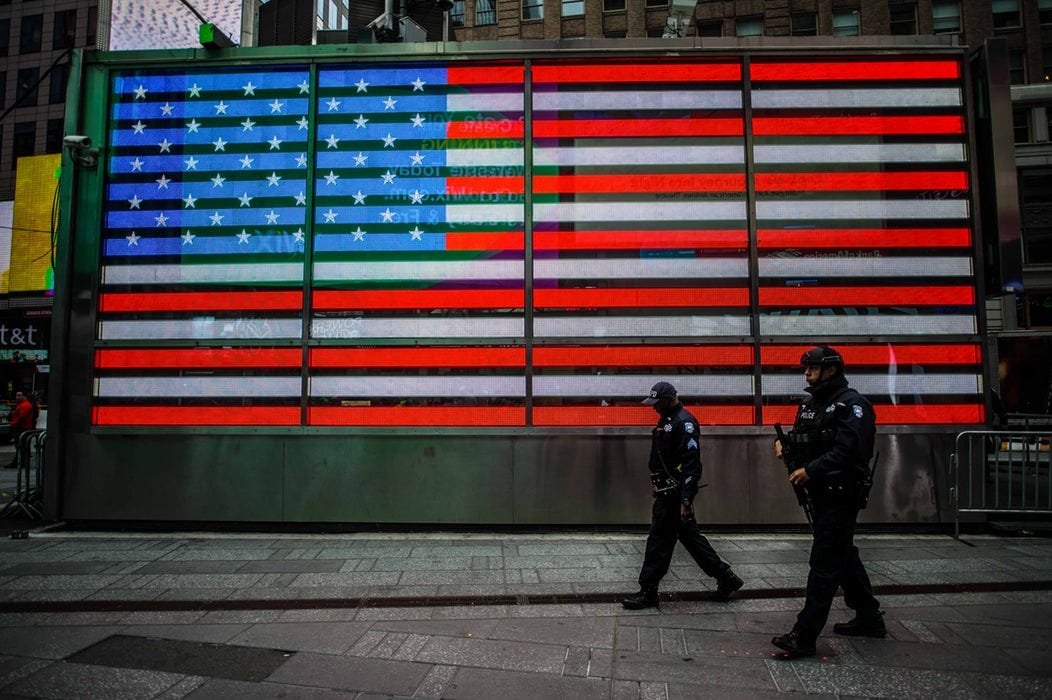
Throughout Talking to Strangers, Gladwell tells his readers how often they choose to believe strangers, acquaintances, and close friends every day. How our society would be worse off without the belief heuristic he calls the ‘Default to Truth.’ Gladwell also examines multiple high-profile cases where those entrusted with power must understand the unfamiliar and make judgments based on their understanding. He shows how those charged with determining the truth fail in their attempt at discovering the full story, particularly when it suits some judgment they have already made about a suspect, usually a stranger.
The potential for discovering a higher-profile crime is why Encinia is inclined to pull Bland over for failing to signal a lane change. In many ways, Encinia is fishing for arrestable offenses in rural Prarie View, Texas, and it shows in statistics Gladwell unearths about the officer’s stops on the same stretch of freeway. Too, it is Encinia who will escalate this traffic violation by asking Bland to put out her cigarette, ordering her to step out of her car by pulling his taser. He believes Bland’s demeanor is a result of something criminal. Encinia relies on the training, suggesting that Bland’s inward motivations can easily be discerned in her demeanor towards a state patrolman.
But Gladwell cautions that whatever authorities search for has limits. These limits are almost entirely set by their interpretations of strangers they judge.
He cites the case of Amanda Knox, an American citizen detained for almost four years by Italian authorities due to behavior perceived outside the grief authorities expected of her. Additionally, when Gladwell dissects facial movements from a scene on the show Friends, it discusses how most Americans believe emotional transparency works and that it is normal for strangers to be emotionally transparent. Gladwell presents research that confirms that the emotions we pay our actors to display are not necessarily the same facial expressions we express when we feel an emotion.
Why should we believe strangers reflect our expected facial contortions when relating their inner emotions?
It turns out humans are only average at adjudging strangers. Among substantial other research, Gladwell calls to the reader’s attention to Jon Klineberg et al.’s Human Decisions and Machine Predictions which shows how a less-informed artificial intelligence system demonstrably outperforms the judicial bail decisions of human judges. For example, human judges release almost half of defendants the model deemed to belong to the riskiest 1% of those most likely to commit another crime or skip out on bail (Page 22/258). These human judges have what is supposed to be an advantage over their computer adversaries — they get to interact and converse with each defendant. After this section in the book, Gladwell wonders how advantageous our face-to-face meetings with strangers are.

“We tend to judge people’s honesty based on their demeanor. Well-spoken, confident people with a firm handshake, those who are friendly and engaging are seen as believable. Nervous, shifty, stammering, uncomfortable people, who give windy convoluted explanations are not seen as believable.” — Malcolm Gladwell
While Sandra Bland’s suicide was egregious, Gladwell does not stop there. Instead, he pulls back and explores the act of suicide to scrutinize the care under which Bland, and countless others, are entrusted. Herein the last feature from Talking to Strangers is a psychological concept called coupling.
The idea is that place and context dictate more about a stranger’s behavior than any inherent desire to pursue that behavior before entering a situation. For the sake of brevity, if you are interested in learning more about how coupling applies to crime, which Gladwell also covers, I would encourage you to purchase his book. The remainder of this piece will concern Gladwell’s interpretation and recrimination toward the administrators of Bland’s suicide.
“What do we do when things go awry with strangers?
We blame the stranger.” — Malcolm Gladwell
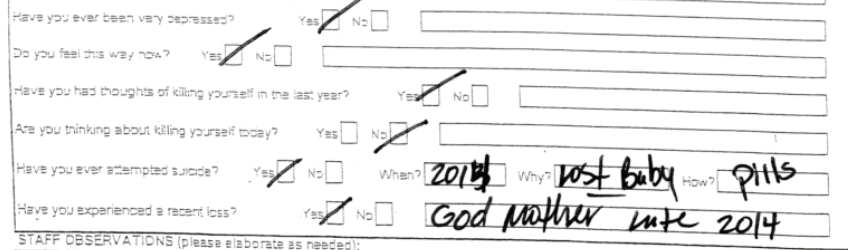
Upon booking the arrest, Sandra Bland is given a 15-page jail intake form. Therein, she describes the loss of her godmother, a failed suicide attempt related to losing a child earlier that year, and that she takes a medication called Keppra with side effects that include depression and aggressive behavior. When filling out the administrative portion of the form, Waller County officials failed to put her on suicide watch or alert a mental health professional. Bland’s autopsy would also reveal linear cut marks on her left forearm, which had not been present at the time of her arrest.
To begin the discussion of Bland’s suicide, Gladwell recounts the English poet Sylvia Plath. Plath, recently abandoned by her husband and her two young children, committed suicide toward the tail end of England's winter so cold that The Guardian released a pamphlet about it. Having attempted suicide before, Plath would have been keenly aware that the gas used to power English stoves was lethal with carbon monoxide. Still, she would not attempt the act until a series of events led her to believe there was no better option available to her. So adept a companion to suicide, the particular gas used to heat English homes’ replacement years later with natural gas would provide one of the starkest examples against the still-to-this-day popular notion about suicide called Displacement.
Displacement is a rationalization about the suicidal individual, which argues that when someone is prevented from committing suicide, they will perform that action when they discover any new opportunity.
Gladwell finds fallacy through aggregation utilizing the act of suicide in San Francisco. Over countless years, San Francisco authorities would contend that a safety net to prevent the predictable suicides occurring at the Golden Gate Bridge was not worth the cost. The justification per letters in opposition to the construction of the net? Displacement. Gladwell points to research published in 1978, which showed that of 515 persons who had been restrained from jumping off the bridge, 94% were still alive. Despite this evidence, it will be 2021 when the Golden Gate Suicide Barrier’s construction is completed, almost 88 years after the bridge was built. This lack of public need for nets has cost thousands of lives.
While the nature of suicide may be more indicative of the individual committing the act, Malcolm Gladwell is right to believe that Sandra Bland should be alive today. Bland moved to Prarie View, Texas, and was detained at the instigation of State Patrolman Encinia, held for three days without mental care, and left to her own devices with all the context in the world that her new life would be no different.
Talking to Strangers is a book of many stories, as anyone familiar with Gladwell’s work is well accustomed. Its interpretation of the events surrounding Sandra Bland is effectively a summary of research Gladwell argues should make the reader ask why police are allowed to conduct their associated responsibilities by smothering the expression of a stranger’s truth.
Thanks for reading! If you like this work, see some extras below:
The One Where North Dakota Gets Mad About a Pride Flag
The One Where Michael Lewis Examines ‘Cheating’
The One Where You Adopted A Dog
Originally published on Medium.