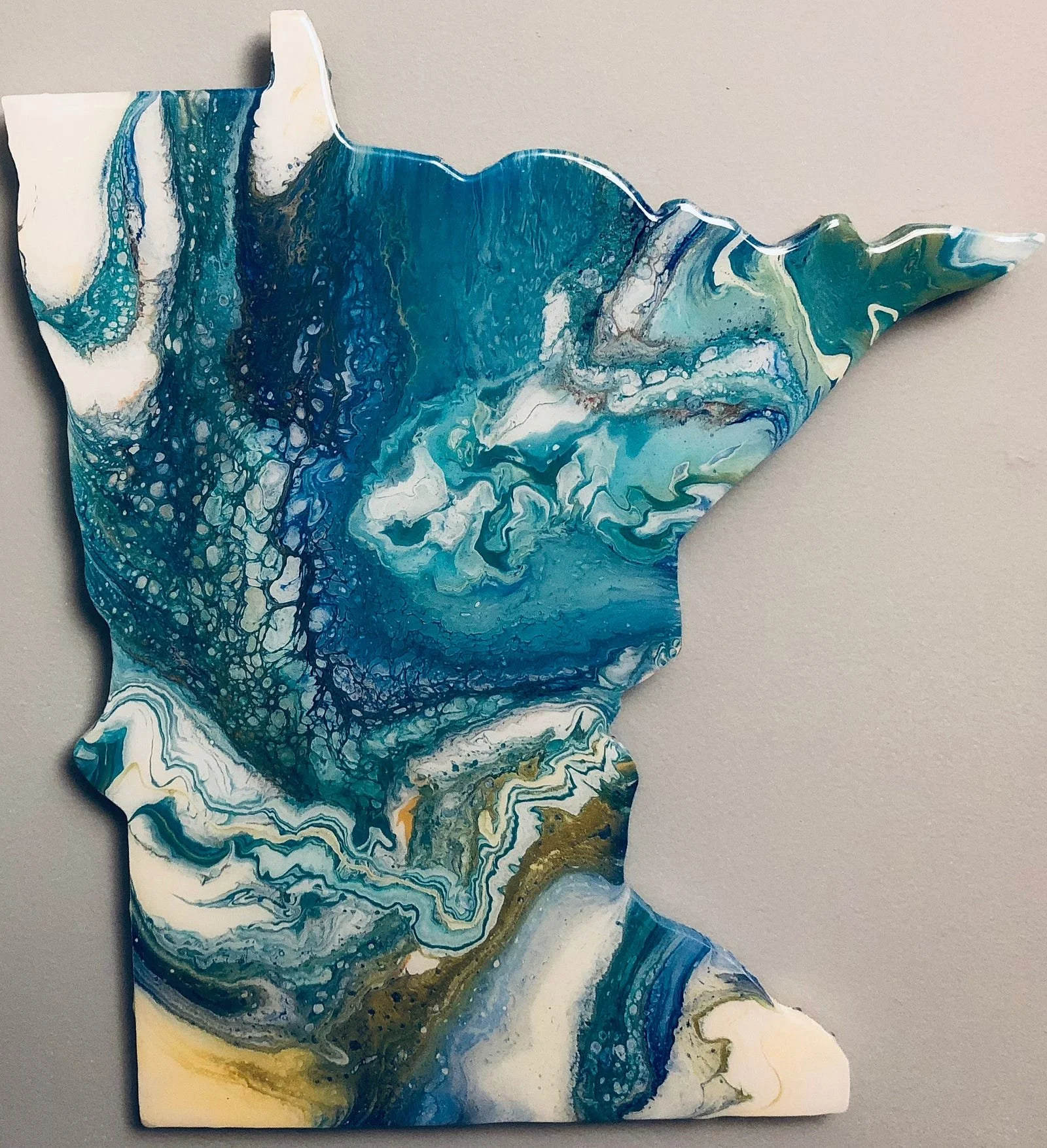
Depending upon where you live, you may have heard of my high school teacher. At sixteen, I only knew him as my AP Geography teacher. On Tuesday, November 6th, 2018, Minnesota will be voting for governor, and I suggest you vote for Tim Walz, a true Minnesotan Scholar.
To explain this moniker further, I need to begin with Len Small, a former governor of Illinois, where I have lived since 2007. Joseph F. Fifer, in court, defended Small — who served from 1921–1929 and was famous for his connections to the Ku Klux Klan — from a corruption charge using the argument that the governorship had “the divine right of kings.” The Federal Government, not surprisingly, disagreed. This still seems an active disagreement in Illinois, as four of our last seven governors have spent time in jail.
But Minnesota? As I hear from my parents' dispatches, politics in Minnesota are still about Minnesota. And maybe that’s why so few Minnesotans leave. Minnesota is a great place to raise a family, and I would not trade my experience growing up there for any other state. I am beyond indebted to the public education I received in Minnesota because Mrs. and Mr. Walz were my teachers, among many others, including my parents.
Gwen Walz was my sophomore English teacher. To this day, I still remember finding it odd how much time Mrs. Walz spent on Transcendentalism — popularized by Ralph Waldo Emerson, among a few famous others. We spent at least a month on the topic if you include references and callbacks. One line of Emerson’s I have grown to cherish in revisiting him as an adult is, “A foolish consistency is the hobgoblin of little minds, adored by little statesmen and philosophers and divines.”
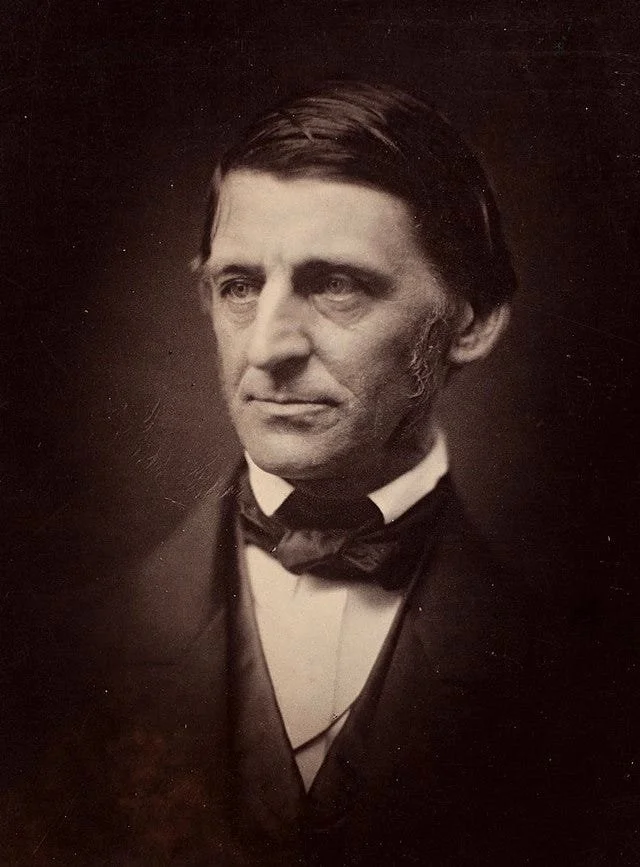
But if I want to tell you why I would call Mr. Walz a Minnesotan Scholar, I must first tell you about The American Scholar, a speech Ralph Waldo Emerson gave at Harvard in 1837. Therein, Emerson discussed how important the average man could become in 1837. And so quickly, too — but how disenfranchised and removed large swaths of the population remained. That was weird for 1837 — internationally, power usually came to you through royalty or the military — so you either had it immediately or, maybe, eventually. However, at that time, the last 60 years in America had shown this was no longer a hard-and-fast rule but instead a past practice. To be a thinking person in those times, you could succeed. However, Emerson argued that this would not be enough for America to thrive. To emphasize his point, Emerson used the lament of Johann Heinrich Pestalozzi. This man is credited with making the entirety of Switzerland literate by 1830. On his deathbed, the Swiss surmised his learnings: "I learned that no man in God’s wide earth is either willing or able to help any other man.”
How useful these thinking men became later in life.
Emerson rejected that Swiss statement as simple melancholy and argued that we should also. He said the problem was not the helpless man but the thinking scholar. To blame this on man's nature was to forget the nature of personal and natural sovereignty—the idea that one nation or person has full authority over itself and no other can impart their will upon it without that original’s consent.
1837's scholars, as Emerson saw them, were “decent, indolent, complaisant. See already the tragic consequence. The mind of this country taught to aim at low objects [and eat] upon itself. There is no work for anyone but the decorous and the complaisant.” Emerson argued that his audience, the top twenty-five graduates from Harvard in 1837, should not aim to be a thinking man but a man thinking. Doing so in this new nation, they would no longer be just a scholar but an American Scholar.
It is this speech that the noted polymath Oliver Wendell Holmes Sr. — not to be confused with his son, a Supreme Court Justice — called “The Intellectual Declaration of Independence.”
If some of this era’s problems sound familiar to you, they should. While judgment is precarious based on life experience, Mr. Walz is someone I would call a Minnesotan Scholar. While there may not be a Walden Pond amongst the state’s ten thousand lakes, there is a township.
I still remember Mr. Walz’s AP Geography class. Seventeen years later.
In Mr. Walz’s class, we tackled the topic of sovereignty with the same intensity that John Randle tackled Brett Farve. My classmates' excitement for AP Geography might seem ludicrous to an outsider, but Mr. Walz had that reputation. He would start classes like most teachers, and we followed his lesson plan. However, as a class, we eventually learned that if someone asked the right question, Mr. Walz would answer it. And then he would keep answering. He made no secret of his uncertainties in those answers, but he would get back to us after pondering our questions. We never really kept track of these tangent-inducing queries until someone did. And then we all started keeping track.
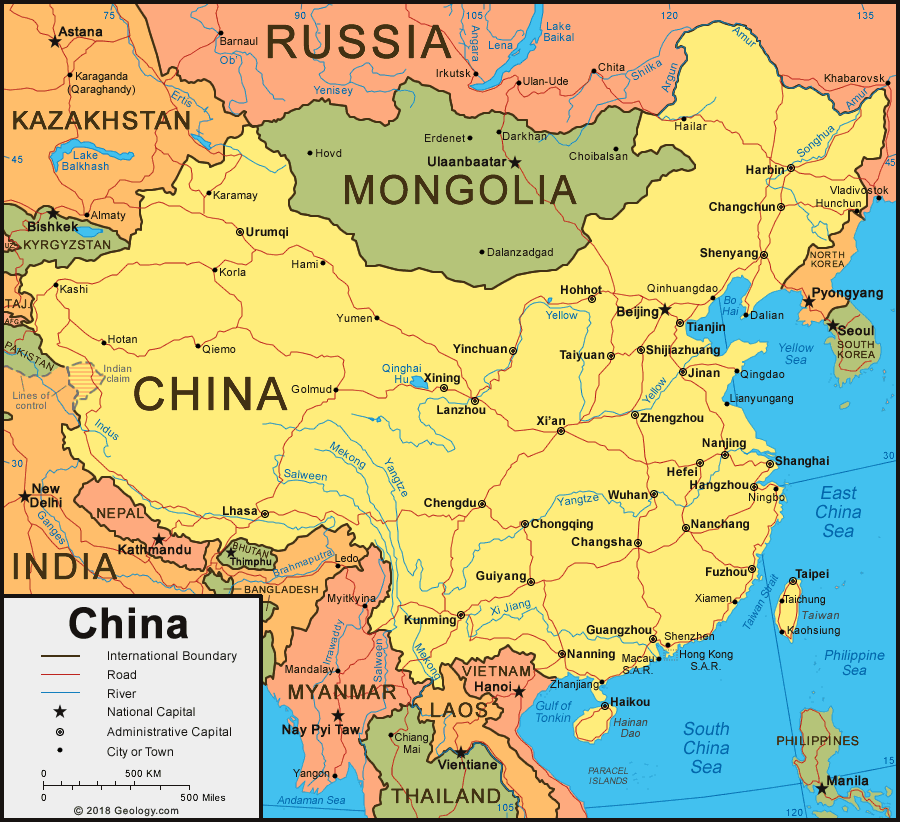
Eager to engage with an adult who actively engaged with us, we discovered Mr. Walz was a total badass. He was a Master Sergeant in the Army National Guard — the highest-ranked enlisted officer ever serving in Congress. He also began his teaching career in China through WorldTeach. This program was started in 1986 by Harvard University students and partners with governments to provide volunteer teachers to meet local needs and promote responsible global citizenship. To reiterate in modern terms, Tim Walz worked for an education startup in China at the end of the Reagan era. Eventually, both Tim and Gwen spent summers taking high schoolers from the Mankato area to visit and learn about China.
But in 2001, Mr. Walz was answering my AP Geography class’s questions. We talked about where Mr. Walz saw the United States from the perspective of his world travels. This was an AP course, after all. He did his best to respond but didn’t sugarcoat. He explained that what America had done for the world over the past few centuries was remarkable and that we should be proud. But our behavior as a country was not always perfect. One day in September, as the bell rang for lunch, he summarized his thoughts quickly by saying, “I can’t tell you the where or when, but I think something will happen, and America may not be ready for it.”
We went off to eat lunch, an adult having said the darndest of things.
The actual next day, per my memories, my daily structured reading was interrupted to inform of a plane that had crashed into the Twin Towers. Those were in New York, right? I did not see the events live on TV. But I didn’t have to. It was the only thing on the news for months after. Years after. Decades after. This July, I saw the planes crash into the Twin Towers while visiting the Fritz Koenig retrospective at the Uffizi galleries in Florence, Italy. How can one watch the wanton destruction of so much life and not see it live?
Every. Single. Time.
But two hours later, in Mr. Walz’s room, we were a tension made form. We had stayed in school, but speculation ran rampant through the halls about that state as a continuance. Despite this, we were also model behavior made form — because Mr. Walz was there.
We all remembered that darned thing he had said.
But, on September 11th, Mr. Walz didn’t know what to say. His statement the day before had been a coincidence. Like the rest of us, Mr. Walz had many emotions, chief among them a curiosity about what the U.S. Government would do in response.
As with many educational institutions, the events of 9/11 ripped our schools apart. Among other prominent topics, in Mr. Walz’s class, we discussed the League of Nations and why it failed. We discussed the United Nations and where it was failing. We discussed how the nature of treaties established within the United Nations functioned so all nations could make plans. How productive could a country be if it were not chronically looking at who might invade next?
You, the reader, might be well situated to ask, “How important are treaties anyway?” I suppose my only answer would be to relate that around June 11, 1776, the Continental Congress, while preparing to secede from Britain, resolved to create three committees for three tasks: The creation of the Declaration of Independence, the creation of the Articles of Confederation, and the creation of a “Model Treaty” to guide foreign relations. These men were going to war. Treaties were on the to-do list.
But I am still so grateful for that school year because Mr. Walz helped me understand something not evident about treaties, at least to a teenager who rarely left Minnesota. During our discussions, I wondered aloud how any nation would be held to account if they violated their treaties. Mr. Walz duly responded to the current state of international relations, explaining the United Nations Security Council, warts and all. But something still did not sit right with me. If this system was the world’s most tried and true solution, why were there still so many humanitarian issues tremoring the fault lines of the world?
“Mr. Walz,” I asked. “Why does any nation have to adhere to these treaties?”
“You know, Kyle,” Mr. Walz responded, “it’s almost like we wrote this lesson plan together. Because they don’t.” When your parents are teachers, you see the work that goes into a lesson plan, and this was the best compliment I ever received in high school.
As discussed much earlier, sovereignty applies not only to nations but also to people. Understanding that no nation and no person is necessarily obligated to do anything is a life lesson. Mr. Walz gave life lessons to his students because Mr. Walz is a teacher. And not just because it looks cute on a placard or as a tagline in some political ad. Mr. Walz was one of a family of teachers at Mankato West High School who dared to explain the world we both lived in.
But yes. I got to discuss the nature of treaties and politics with the man currently running for Governor in Minnesota right after September 11th. Totally normal, right? Well, yeah, he was my AP Geography teacher.
Unlike many at the time, Mr. Walz didn’t use 9/11 as his springboard into politics. That event came years later when Mr. Walz and a group of Mankato West students were unceremoniously interrogated and removed from George W. Bush rally. A student had been found to have a John Kerry sticker on his wallet.
And that is all I know about it.
I haven’t spoken with either of the Walz’s since graduating high school and do not plan to. The last time I thought about Mr. Walz before discovering he was running for Governor was at a bar called Sidetrack in Chicago. I was there watching then-President-Elect Barack Obama give his acceptance speech.
Nobody else knew it, but I was cheering twice as hard. My AP Geography teacher became only the second-ever incumbent Democrat to hold onto Minnesota’s 1st congressional district. The second-ever. The district was created on March 4th, 1861– twenty-four years after Ralph Waldo Emerson told Americans to become Americans.

I could go on, but rose-colored glasses run in my family. All I hope to impart is that Mrs. and Mr. Walz, as teachers, very much helped me become who I am today. I believe that Mr. Walz, as Governor, will help all Minnesotans become who they want to be tomorrow.
As I write this from Chicago, Illinois, you have no idea how lucky you are.
I do not know where I’ll be on Tuesday, November 6th, 2018. But wherever that is, I will cheer for Mr. Walz like my Grandmother used to cheer for Harmon “Hit-a-home-run” Killebrew.
Thanks for reading! If you like this work, see some others below:
The One Where North Dakota Fights About a Pride Flag
The One Where Michael Lewis Examines ‘Cheating’
Originally published on Medium.