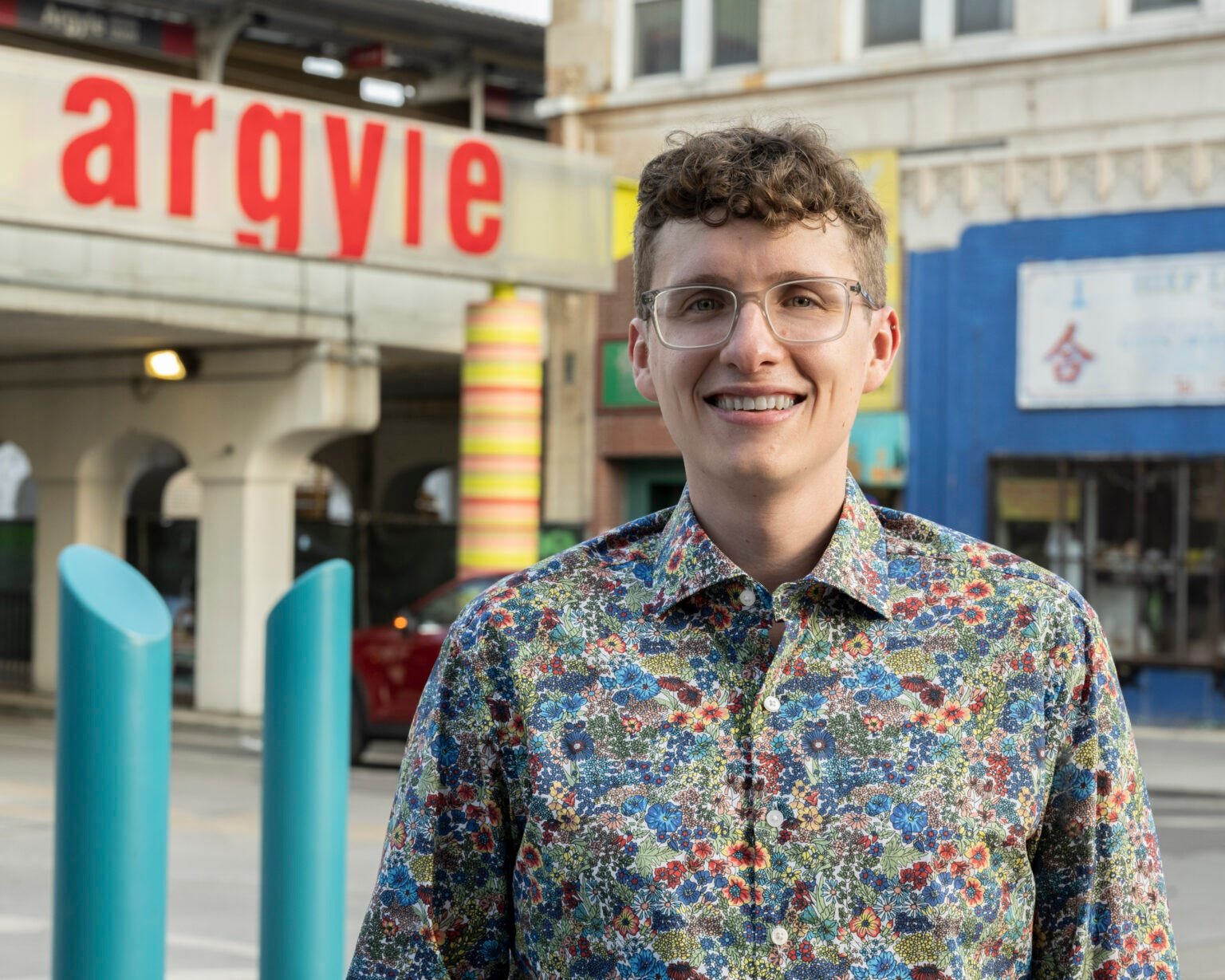
Larry Svabek tells me on Thursday, January 19th, that he first canvassed with his mother in Orland Park, Illinois. It was 2003, and Kathie Svabek was running for an executive board position for their local school district. If you were to ask Kathie today — as Larry now lectures at the University of Chicago — she might find her time on the board well spent. But the experience also came with an unexpected cost. Midway through her term, Kathie went public about hiring practices within the district.
“It was a tough trial for my mom. She had never run for office before. She won. She got elected to the school board and found out that there had been some violations of transparency laws and ended up being a whistleblower and received death threats for it. That really unsettled me as a kid.” — Larry Svabek
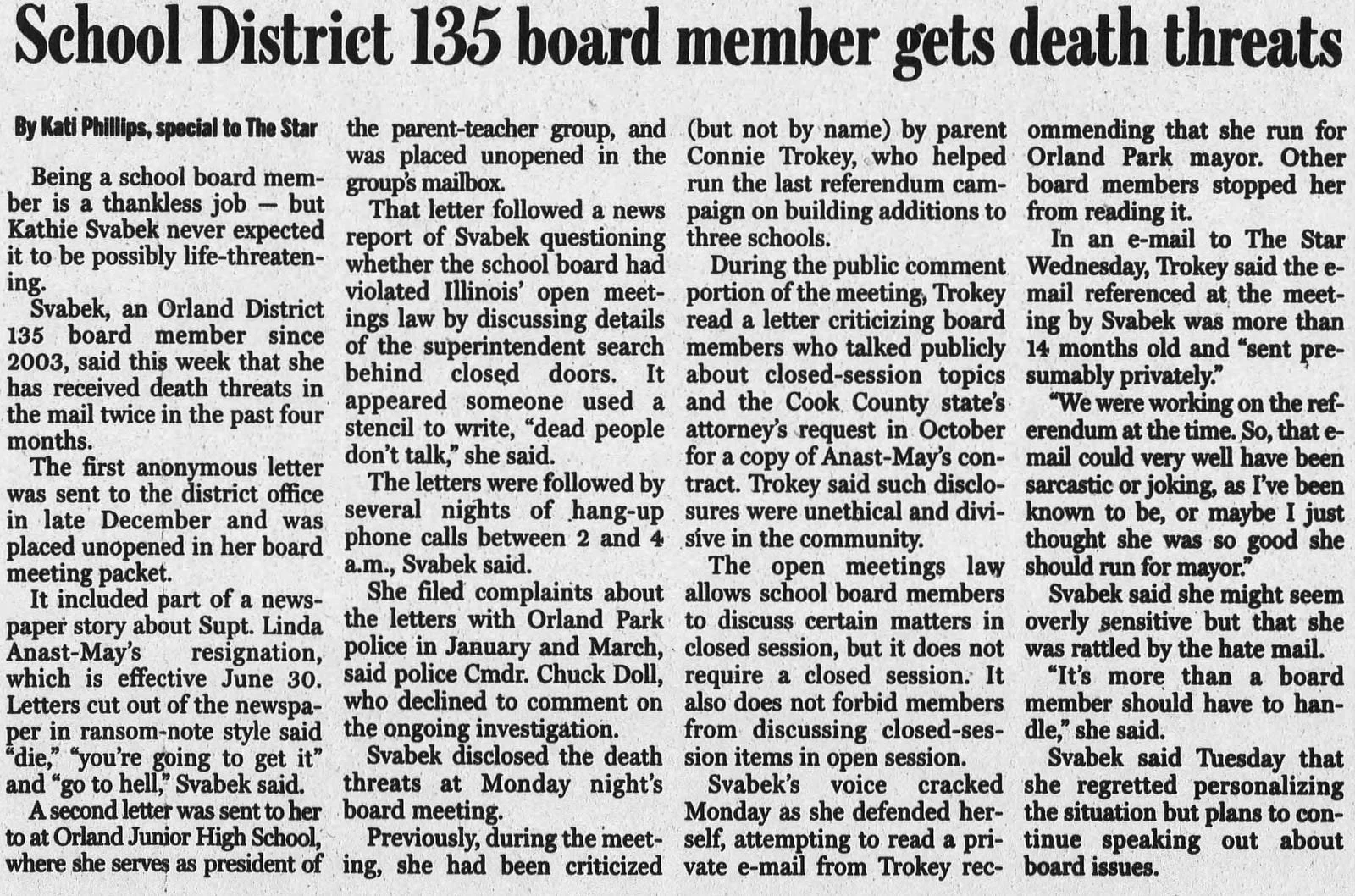
“It was a scary moment [as a kid]. Why were people doing this and why are they so angry? I think at that moment I learned that we need to elect leaders like my mom who are courageous, who do the right thing, even when the right thing is unpopular in the group that you’re in. That set me off into politics.” — Larry Svabek
For some Chicagoans, meeting Larry Svabek on that journey has not been difficult. In 2014 as an undergraduate at Northwestern University, Svabek worked with NUVotes as its ‘Voter Van’ drove thru campus to register students to vote. But his most recent involvement occurred when the doctoral student wrote himself into the citywide discussion about modernizing the Chicago Police Department.
“I got very involved in organizing on the northside around what was called CPAC, the Civilian Police Accountability Council ordinance. Which was meant to create civilian and community control of police… We were sitting on street corners, making phone calls at night talking to people about it. Then it became clear we needed a larger coalition if we were going to pass something and I served on the negotiations that fused CPAC and the alternative — GAPA in case people are interested. That created the Empowering Communities for Public Safety Ordinance.” — Larry Svabek
The ordinance was passed in July 2021. As a result, Chicagoans now elect three residents per police district to mediate, review, and work alongside Chicago Police Department leadership. Svabek tells me he hopes this upcoming class of alderpeople can find productive ways to work with these newly elected officials. Svabek is confident about how he would engage himself.
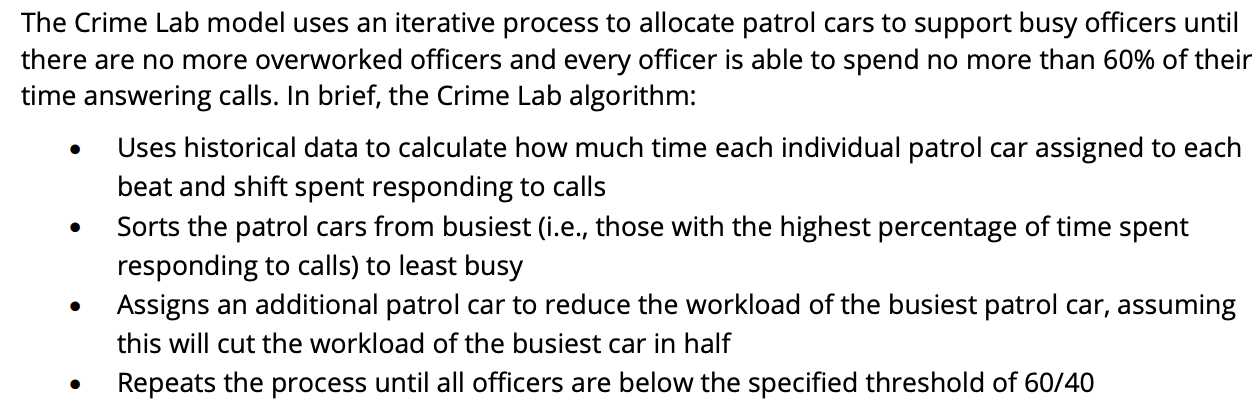
“I support the University of Chicago Crime Lab. They have a great report out on workforce allocation in the police department. We have to be smarter too about how we use the officers that we have… I support the reallocation project. People always ask [about] mental health care. Yes! Mental health care, of course, everyone should have access to mental health care. That includes police officers, especially someone who is walking around with a weapon.” — Larry Svabek
Another entity experiencing allocation difficulties in Chicago today is its transit authority. During the pandemic, ridership plummeted by 80% and, while recent trends are positive, has not returned to pre-pandemic levels. With fares and passes accounting for roughly 85% of the Chicago Transit Authority’s budget, an organization with around 10,000 employees will need to balance its books when America Rescue Plan Act funds run out in 2024.
“I think the CTA needs to address staffing shortages head on. We need to have a city council that is going to exercise oversight of the CTA… If we want folks to take the CTA we have got to make sure that it is a more efficient form of transit than car. Right now it takes over an hour to travel from Edgewater to Logan Square. But in the car that trip is 75% faster. We have to do better on that front using bus rapid transit routes as a more cost effective, reliable way to get folks around when they’re not taking trains.” — Larry Svabek
Transit remains a complex topic in the 48th Ward. The Bryn Mawr stop is scheduled to remain closed until December 2024. While many Clark street bus stops are infamously haunted, the local economy at Bryn Mawr has suffered disproportionately compared to their Andersonville neighbors. But even that corridor has had to come to grips with a new Taco Bell, which residents have expressed dissatisfaction with. While the national taqueria’s new property was already zoned for the business’ entrance into Andersonville, Svabek has a plan for discussing future zoning decisions.
“I want to establish a diverse zoning committee that is made up of people who own property, who are renters, who live on the south end, the north end, the east end, and the west end of the neighborhood… I will hold developers accountable to flyer [for new developments which require zoning changes] nearby neighborhoods so people know when those meetings are.” — Larry Svabek
That is if there is any development at all. Rising interest rates may prevent the number of zoning changes required in the past few years. With this in mind, Svabek wants to look into how best to solve business and transit problems in the 48th Ward simultaneously.
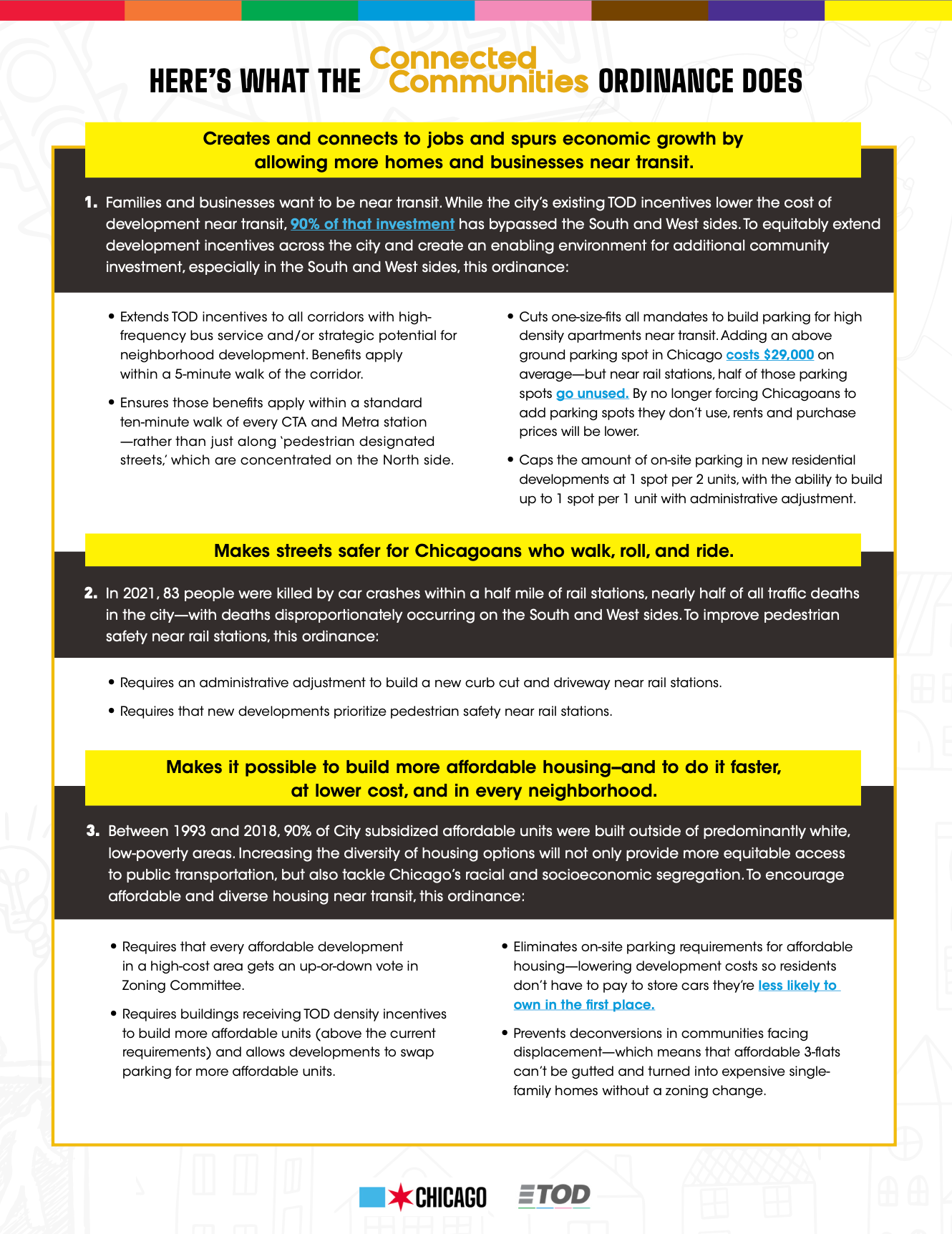
“Increased density, especially around transit — we have this new connected communities ordinance. I think really being honest with folks and saying, ‘Given the kind of place we’re going in Chicago, there’s going to be more density to build around [the Bryn Mawr cooridor] and that’s going to make this a more exciting place to have your store.’” — Larry Svabek
Another headwind facing the 48th Ward is its boundaries with four onramps onto DuSable Lake Shore Drive. These onramp’s underpasses have long attracted Chicago’s unhoused population. For this population, Svabek remains disappointed in the City of Chicago’s efforts to take action.
I think the mayor has turned her back on Bring Chicago Home. We have a city council who won’t even show up to meetings to discuss the proposal. I think that is unacceptable. I think that homelessness is a critical city-wide issue, and unhoused neighbors should not be used as some pawns in a political game. — Larry Svabek
“When developers put large developments in the ward, we have to insist that affordable units are built on-site. That there is no in-lieu of fees paid to the city. We need to press to make sure that those affordable units include family size, especially when they’re near transit. I also think we need to expand the Accessory Dwelling Units Pilot, make it permanent, and city-wide because we need to allow landowners to convert garages, basements, coach houses, etc. into livable units that are up to code.” — Larry Svabek
Chicago’s 2023 elections take place on Tuesday, February 28th.
Run-off elections will occur on Tuesday, April 4th.
This project aims to document the eighteen individual perspectives and backgrounds of alderperson candidates running for office in Chicago’s three contiguous and LGBTQ+ populated wards during the 2023 Election cycle. &, if necessary, beyond.
More of my writing:
The One about a Pride Flag in North Dakota.
The One about Malcolm Gladwell’s Talking to Strangers.
The One about Pitbull Adoption.
Originally published on Medium.