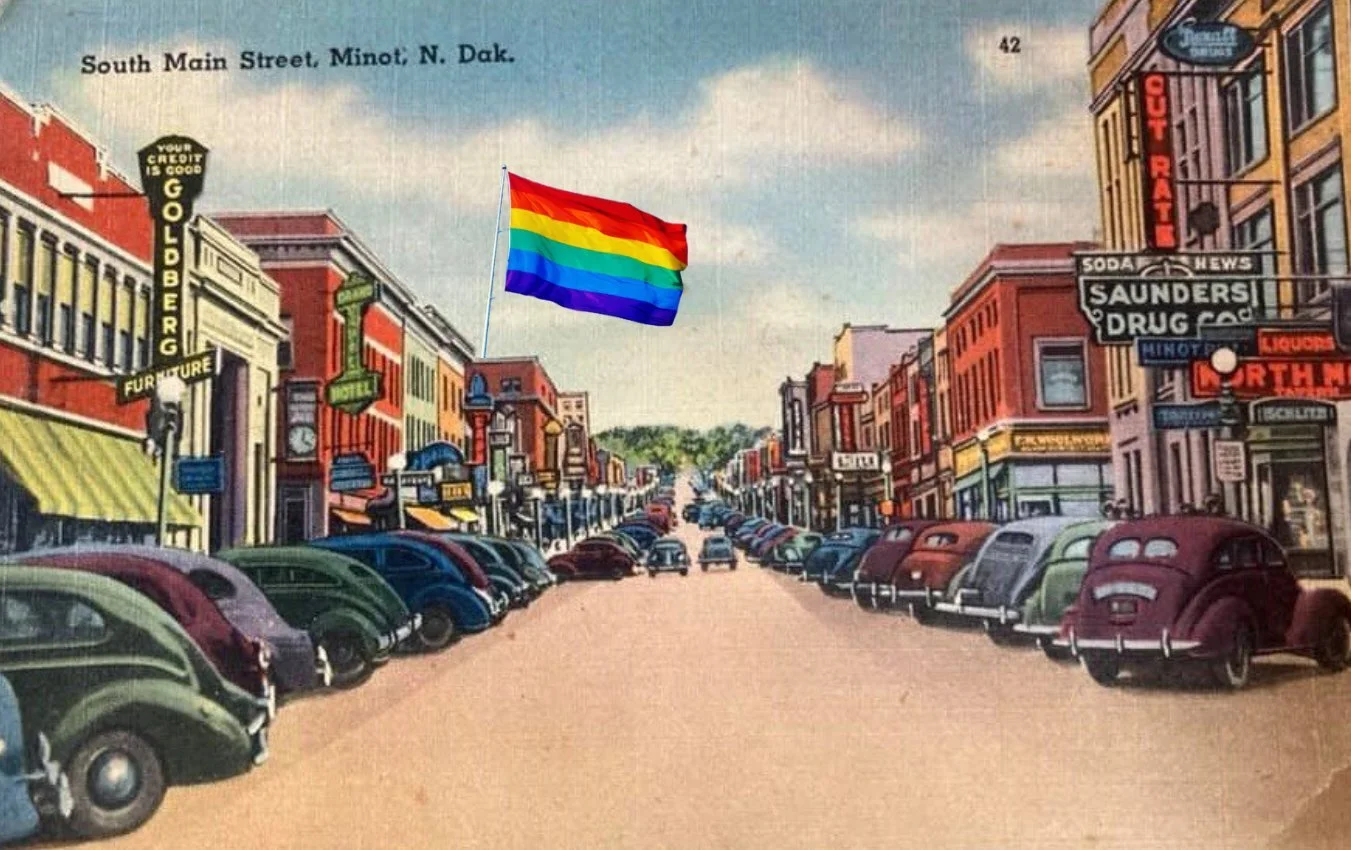
An hour and a half into the April 19th, 2021, Minot City Council meeting, Item 7.8 came up for consideration. That day, the flying fate of all non-governmental flags within the Magic City was scheduled to be discussed — well, maybe. Before the Council could begin sharing their views, the Mayor responsible for the local debacle recognized Alderman Podrygula.
“I move that we postpone discussion of this item until one of our meetings in May. I was asked by Alderwoman Evans to make this motion and I told her as a courtesy to her I would. I feel that everyone needs to be at the table to talk about this and she certainly was a very important and driving force in getting this issue to come to the fore… To give [Alderwoman Evans] a chance to be there and for all of us to have a discussion and come to a meaningful consensus.” — Alderman Podrygula
Alderman Pitner seconded the motion, and a vote was called.
Yes:
Podrygula, Pitner
No:
Ross, Mayor Sipma, Jantzer, Olson
Absent: Evans
“It’s been a tough couple of weeks. I’ve just been trying to put one foot in front of the other… I had to travel for both funerals a lot and now I have to go travel for work for four days. I’m just looking forward to finally being home next weekend…
[The Flag Policy] was on last Monday’s agenda. I asked my colleagues that I’m away for two funerals for people who were very close to me. This is not a time sensitive issue. Can we please table this until the May, 3rd meeting…? When Alderman Podrygula contacted me after the meeting, he said “I’m so sorry” and that only two people voted to defer it. [Alderman Pitner] — who I am very ideologically different with — and I talked and he said, “It’s just the decent thing to do. It wasn’t an urgent matter and you asked us to hold it.”
I haven’t been able to watch the meeting… I am just not in the right mindspace to even watch it.” — Carrie Evans
For the record, Carrie Evans — whose speech on the Pride Flag drew international attention to the small North Dakota town — stated to me that she had no problem with the council’s decision to stop flying non-governmental flags. But what the Minot City Council’s vote represents is bigger than any flag.
There was nothing urgent about this discussion, especially in the light of Alderwoman Evans’ absence. What happened on April 19th, 2021, was just simple exclusion. The majority council’s decision to move the subject forward despite her absence offers a poignant illustration of the obstinance deeply rooted in North Dakota’s political echo chamber: one that effectively saw Carrie Evans’ speech and spat.
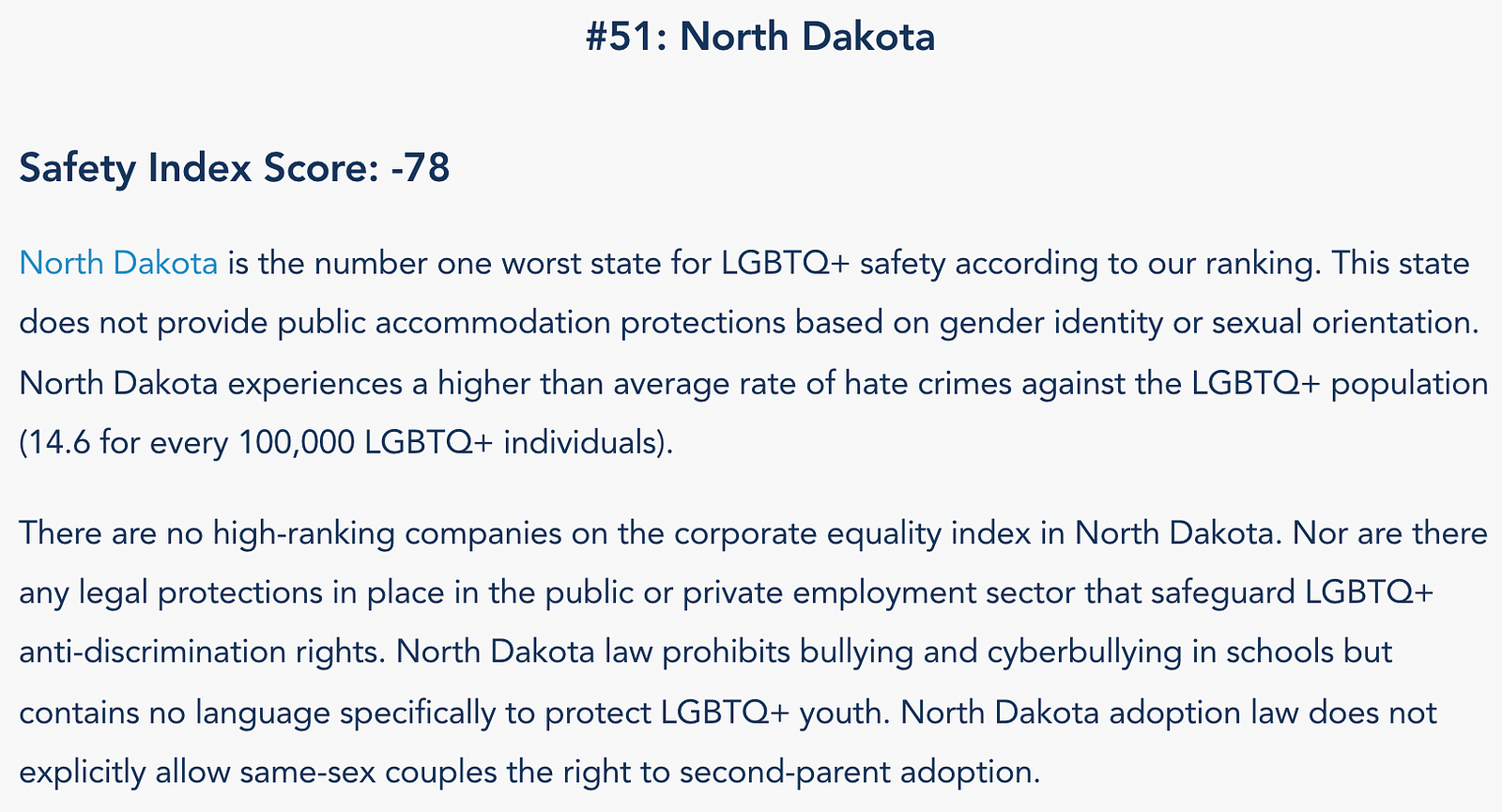
In the following, I will demonstrate how this political consciousness acts to drive the LGBTQ+ people away from their families and hometowns. I will also show how Carrie Evans’ words fell upon a selectively deaf political contingent in what should still be considered the Peace Garden State.
The Rough Riding for Rainbows in a Peace Garden State
In the 2020 Census, almost 780,000 people called North Dakota home. The state’s Diversity Index — a percentage chance that two randomly-selected individuals within a population would be of a different race and ethnic group — increased from 20.6% to 32.6% between 2010 to 2020. The Diversity Index in the county where Minot is located increased even faster.

In presidential elections, North Dakota has only voted for the Democratic Party for men named Roosevelt or Wilson were involved and when a Kennedy was no longer able to run. The state’s federal representation includes two senators and one representative. In more recent years, this representation had been mixed until Democratic Senator Heidi Heitkamp was defeated by Republican Kevin Cramer in 2018. Cramer had been the state’s lone Federal Representative since 2013 and ceded the office to Kelly Armstrong. The state’s senior, and America’s third-richest senator, John Hoeven, is also North Dakota’s former governor, having served three terms. Hoeven’s father — Jack Hoeven — is well known for his extensive work as a banker in Minot. Both state senators are on the record for their opposition to same-sex marriage.

It is of historical note that North Dakota’s official moniker was established before even Jack Hoeven moved to the state. In 1956, the state’s Motor Vehicle Department inscribed the phrase ‘Peace Garden State’ on all license plates. The term proved popular enough that the legislature adopted it the following year. Fifteen years thereafter, state legislators worked to change the nickname to the ‘Rough Rider State’ and failed.
Two years on, a similar attempted epithet switch would crash and burn.
Another effort that met a similar fate was Republican State Representative Mary Johnson’s 2019 attempt to shepherd a sexual-orientation anti-discrimination bill through the state legislature. The Meals on Wheels driver and volunteer attorney’s proposal failed by a vote of 70–22. All eight state representatives from Minot voted against the legislation, and Johnson would be chastised publically for her work by Republican Party official John Tandem.
Tandem’s perspective would find its agenda in 2020, which he began writing in 2016 as the North Dakota Republican Convention passed its party platform. The proposals quickly drew condemnation for positions in opposition to sexual orientation and gender identity legislation, as reflected in Resolution 31.
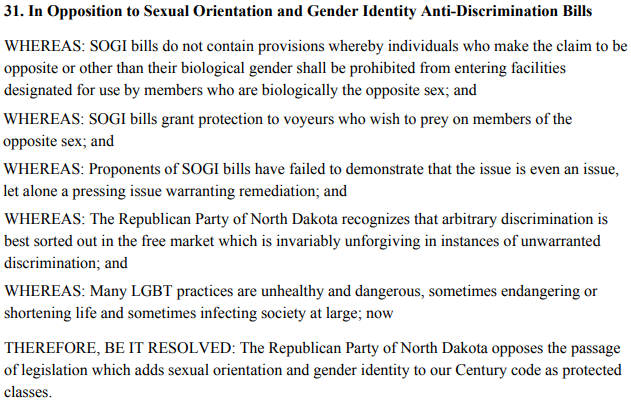
North Dakota’s Governor Doug Burnam would condemn the platform, which eventually was withdrawn. However, the principles behind it would still incline the party to persist with its intent as the state legislature pursued House Bill 1298. Introduced by Representatives B. Koppelman, Meier, Paulson, Schauer, Skroch, Steiner, Vetter, and Senators Clemens, Kannianen, Myrdal, the summary description reads as “AN ACT to create and enact a new section to chapter 14 02.4 of the North Dakota Century Code, relating to participation in athletic events exclusively for males or females, and to provide for a legislative management study.”
A majority of Minot’s state representatives voted to pass the legislation.

How To Fight The Mouse In Your House
In 2011, the state of North Dakota was awash — literally. First, it was Fargo. Then, sections of the state capital, Bismarck, had to be evacuated. But the flooding would strike hardest in the state’s newly booming oil town of Minot. The Souris, also known as the Mouse, River crested to a new record in the Magic City, which caused an estimated $690 million dollars in damages.
4,100 homes would be affected by the floodwaters.

11,000 residents were displaced via a mandatory evacuation order.

While the North Dakota National Guard was responding to the Magic City flood, the Associated Press interviewed governor Jack Dalrymple as he visited the two temporary shelters that had been opened for the displaced residents of Minot. Dalrymple noted how few residents, as compared to the number evacuated, appeared to be staying at the city’s two shelters.
“It just seems like people are so well-grounded here with, like, friends and family. They’re used to asking people to support each other, and they find places to go.” — Jack Dalrymple
The Federal Emergency Management Agency supported the long-term flood recovery in Minot by granting temporary housing funds and assisting with the creation of over 2,000 manufactured homes. After the floodwaters receded and neighborhoods were able to begin rebuilding, various Magic City residents found themselves in a classic fight-or-flight dilemma. Those who fought to reclaim their city would find themselves supported by over 5,000 volunteers from a community-led temporary development called Hope Village.
Ten years after the flooding KX News interviewed Bryan Kramer, who recalled his, his wife’s, and their neighborhood’s battle against the flood, along with their decision to stay and what followed their return home.
“It was really the camaraderie of the neighborhood. We’d all sit in our driveways, pumping our basements empty with a bag chair and a cooler and everyone kind of socializing. In a way, it was kind of a fun time for our neighborhood. We have tremendous neighbors here and that’s why we came back.” — Bryan Kramer
The Mouse River flooding hit Christopher Scott and his family differently. Christopher was eleven during the aftermath and recalled splashing about the Mouse with friends. Like many in Minot, Christopher’s family chose to fight for the Magic City after the flood. They still remember the long road trips that were required in order to access food and water.
“We didn’t have any grocery stores in North Hill, just like everyone else in North Hill, we got cut off. For about a month or two we didn’t have tap water… With food and supplies, there was one road that connected to the South Side of town that stayed open… We had to sit there for three hours to get from North Hill to South Hill.” — Christopher Scott
Today, Christopher is a chemistry major at Minot State University and the Chief Administrator of the North Dakota Student Association. He recalled being introduced to Carrie Evans by Professor Harry Hoffman at a City of Minot flag-raising. Not that of the then-controversial, now-banned Pride Flag, but the earlier, then-uncontroversial, and now-banned Juneteenth flag.
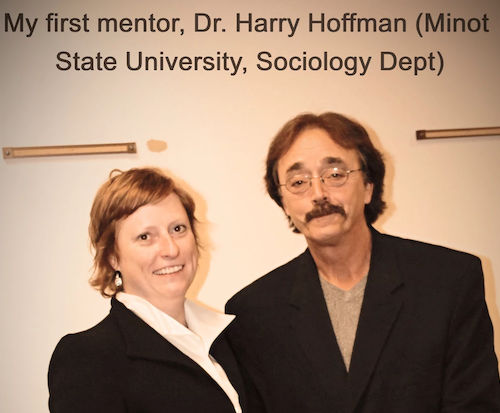
“From there, I have been talking with [Carrie] about establishing more of a connection between Minot State University and the City Council of Minot so that we can advocate for students on campus in the city of Minot. It’s not something that I really noticed coming into the Senate, but we really didn’t advocate for ourselves in the local area compared to the state area.” — Christopher Scott
When Christopher saw Carrie Evans’ speech on September 8th, 2020, he decided to show up and fight for Minot at the next City Council meeting.
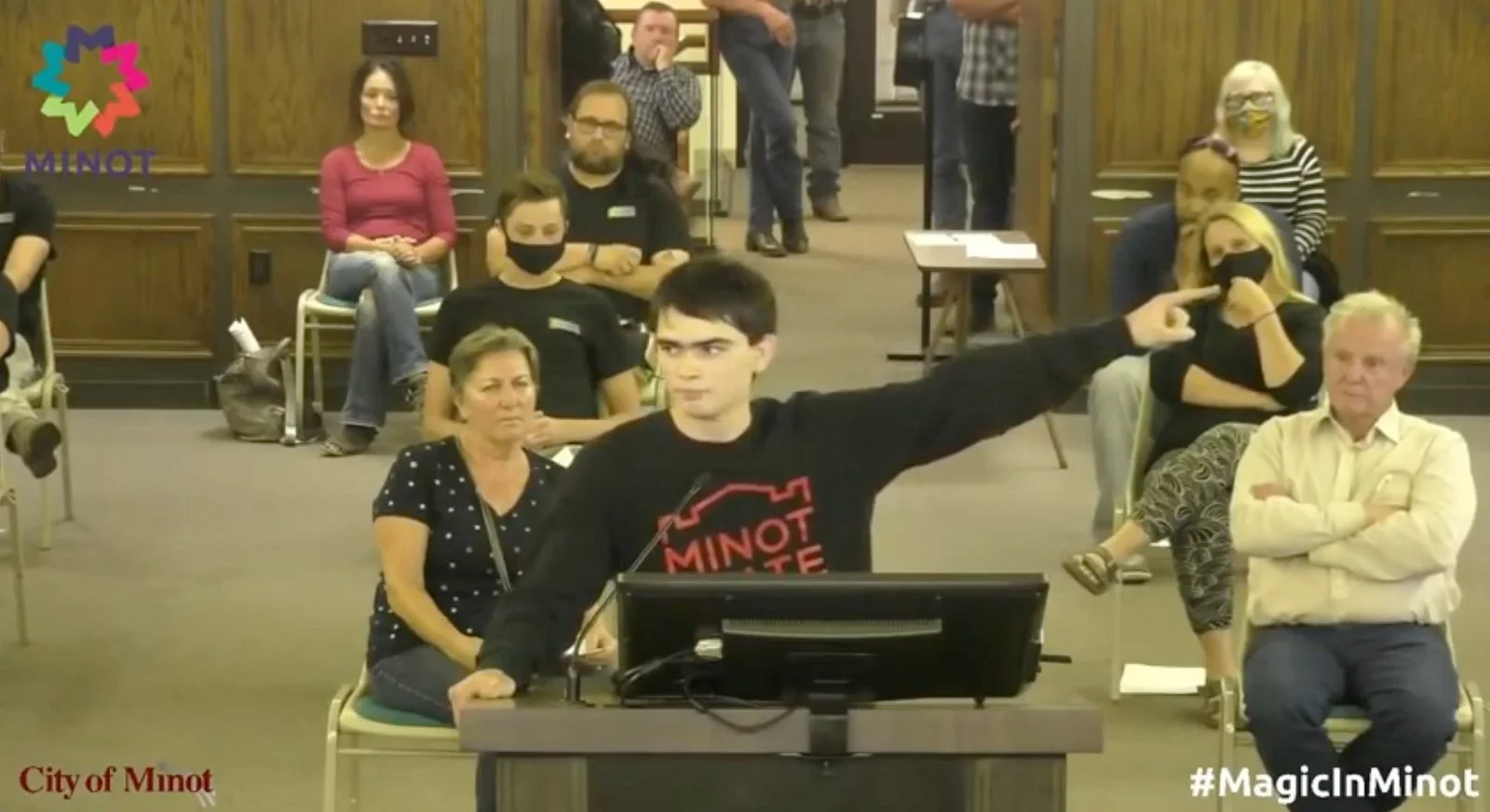
Christopher was quick to point out how the Pride Flag represented everyone’s right to love — and not just the LGBTQ+ population. That attitude led to the uproar from three weeks previous. It also drives many to perform their own Magical City disappearing acts. Christopher finished his speech by pointing out that Minot State University would raise its Pride Flag tomorrow, twenty days after the City of Minot had raised its own.
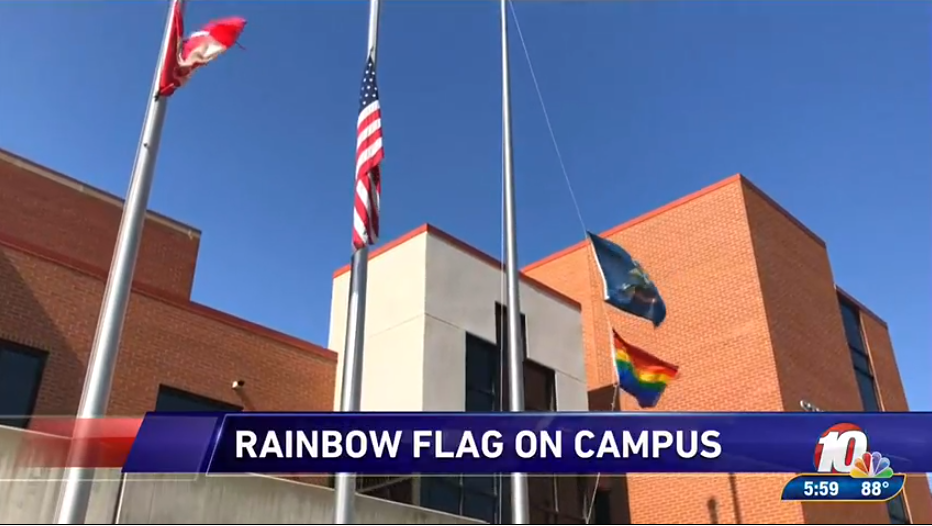
When I spoke with Christopher, he informed me about how the event went.
“[Magic City Equality] wasn’t at the first meeting because they got death threats… that’s a serious thing. However, when you look at the University situation, we had a Pride Flag raising there, nothing. We raised our flag and everyone was in celebration of it and there was not any kind of backfire.” — Christopher Scott
A Magical Beaver Asks For Representation
The only time that Jacob Thomas spent away from his hometown of Minot was while he attended school in Seattle. Jacob returned to the Magic City when he and his wife decided to make that choice together. As soon as they both finished their degrees at Minot State University, Jacob began teaching English at the Minot Public School’s Magic City Campus.
Seven years ago, a student at the campus set about the process of beginning a new group. They determined that Mr. Thomas would be the best individual to act as the faculty advisor for what would later become the Magic City Campus’ Gender Sexuality Alliance (GSA).
“There are certainly bright spots in Minot for the LGBTQ+ kids. We have Magic City Equality, the GSAs, and we have Pride in Minot… There are these bright spots but they’re so few and far between that it’s not enough to sustain them in their day-to-day lives. I feel like the pressure from the community to be a certain way is so, maybe suffocating, that it’s just hard for them to — and I can’t speak to that. I’m cisgendered, heterosexual. I’m an ally more than anything, but that would be my, as an outsider looking in, my assumption.” — Jacob Thomas
Mr. Thomas accepted only to watch many of his school’s GSA Magicians drive or fly away from Minot after graduation. At the same City Council meeting Christopher Scott spoke at, one of Jacob Thomas’ GSA students would let out an audible sigh lamenting his plans to leave Minot after graduation.
“I would run into Asher [Hoffrath] in the hallway and we would talk about what happened. I knew students like Asher were obviously feeling hurt or betrayed… For our GSA, we just left the floor open for students to express how they were feeling. I want to say that Asher took the time to write some letters.” — Jacob Thomas
Many months on from Carrie Evan’s speech and with her general encouragement to advocate for his community, Asher Hoffarth decided to write to his state senator.
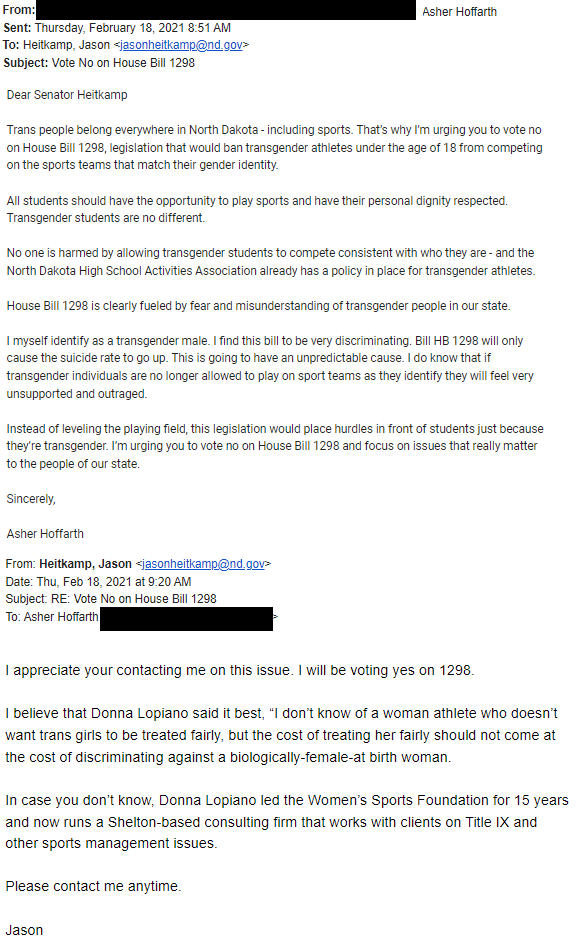
“Jason Heitkamp just sends [back] an autoresponse on his email. Everyone I have known to send an email has gotten the same response. I feel like he’s not even reading [our messages] and is just sending it out.” — Asher Hoffarth
It only serves indignity to discover that the logical cut of Asher’s state representative auto-response is rather dull. Donna Lopiano is listed as president of Sports Management Resources, a consulting firm that maintains no transgender-related content. Lopiano’s blog has also not been updated since 2018. She is a curious selection when considering her leadership at the Woman’s Sports Foundation (WSF). The quote Senator Heitkamp cites is lifted from Kathleen Megan’s 2019 profile of the debate.
Heitkamp’s use of Lopiano’s quote also serially misrepresents the view of the organization from which Lopiano resigned in 2007. Well before Minot’s Mouse flooded everyone’s house, the WSF released On The Team, a report that advocated for the integration of transgender athletes. In 2021, the foundation also filed an amicus brief with Lambda Legal against Idaho’s similarly targeted and later passed legislation while simultaneously making other statements in support of including these athletes.
Despite Asher’s letter, Jason Heitkamp — who was charged with misdemeanor theft — voted to pass HB 1298 on April 15th. The next day, the Senate would pass the bill, only for Governor Doug Burgum to veto it a week later. The veto would be overridden by the House, and the Senate would attempt to do the same, coming only four votes shy of the requisite threshold.
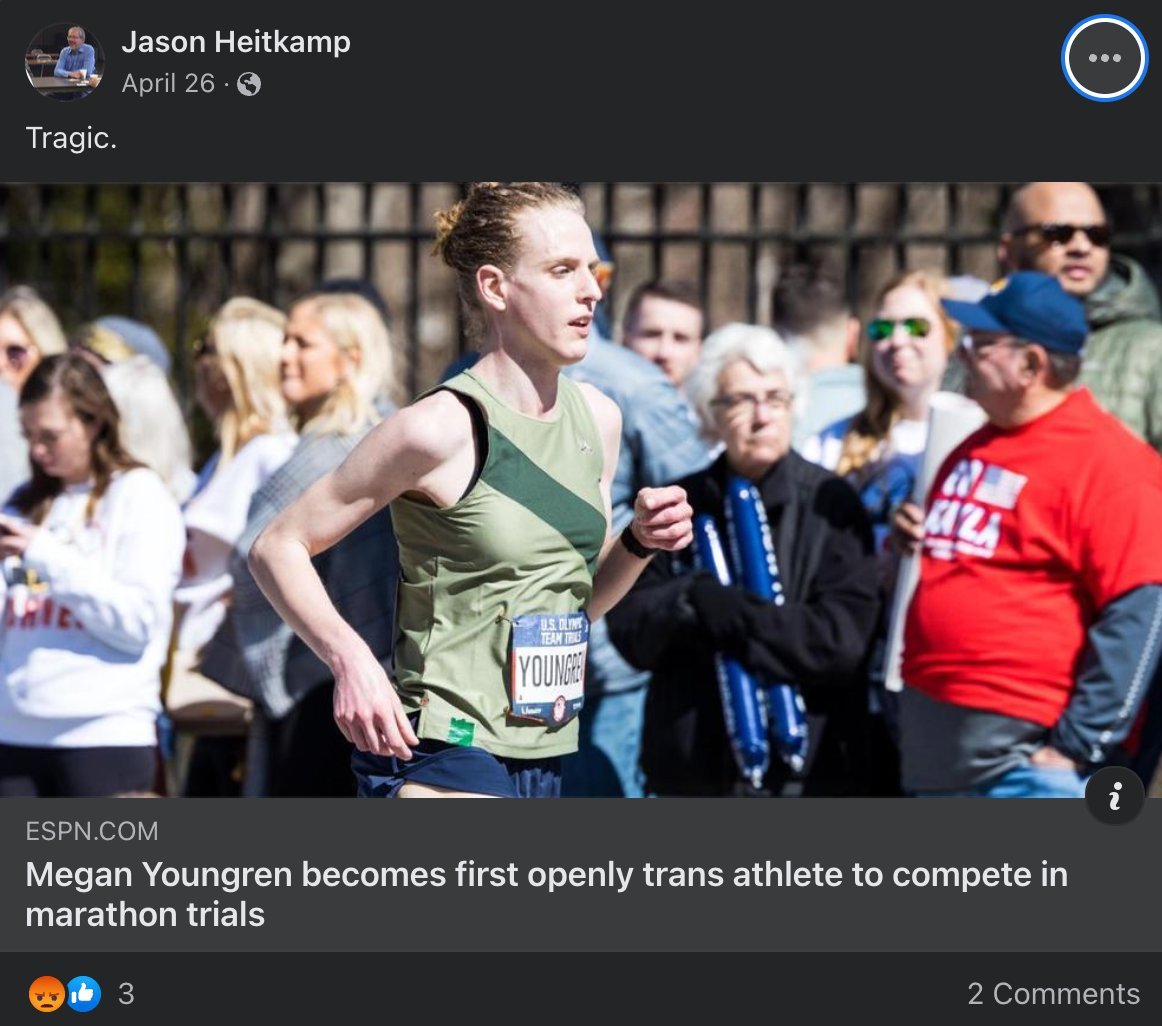
Some could see the failure of the anti-transgender sports bill in North Dakota as a victory. It is not. Rather, the near passing of the legislation symbolizes how willing North Dakota’s state and federal representatives are to shoo out the LGBTQ+ community. While it is clear this lack of representation drives many of the community away, Asher Hoffrath is proof that it does not have to.
On September 30th, 2021, Asher Hoffarth presented Unplugged: My Transgender Life at the Aleshire Theatre in Minot after enrolling at Minot State University. Just as is the ability of any free-thinking individual, Asher changed his mind after speaking to the Minot City Council. He would stay in Minot. After graduating as a Magician, Asher Hoffarth is now a Beaver.
“I’m becoming more the man that I’ve always wanted to be, and that I am, every day. I’ve come out of my shell and I will continue to advocate for everybody that needs to be advocated for because I know what it’s like to not have the advocate and just shut down. I don’t want people to feel like that. Everybody deserves a chance.” — Asher Hoffarth
How Frédéric Would Break & Spit Upon the Bastiats
In recent years, the North Dakota Republican Party has seen an insurgent group — naming themselves the Bastiat Caucus — clamoring for intraparty power. Frederick Bastiat, for whom the caucus is named, was a French economist and a representative in the National Assembly for a short period preceding his untimely death from tuberculosis in 1850.
In a largely one-party state, the group of what journalist Rob Port has called a “mangy coalition of milquetoast libertarians, Bible-thumping zealots, and QAnon conspiracy theorists” has backed or supported several pieces of anti-LGBTQ+ legislation. Beyond HB 1298, which many known caucus members have voted to pass, the Bastiat Caucus has been held responsible for the introduction of HB 1476, which asserted many of the same anti-LGBTQ+ arguments reflected in the previously maligned GOP party platform.
It is of some historical note that Frederic Bastiat wrote extensively concerning the act of legislation in his last published pamphlet titled The Law.
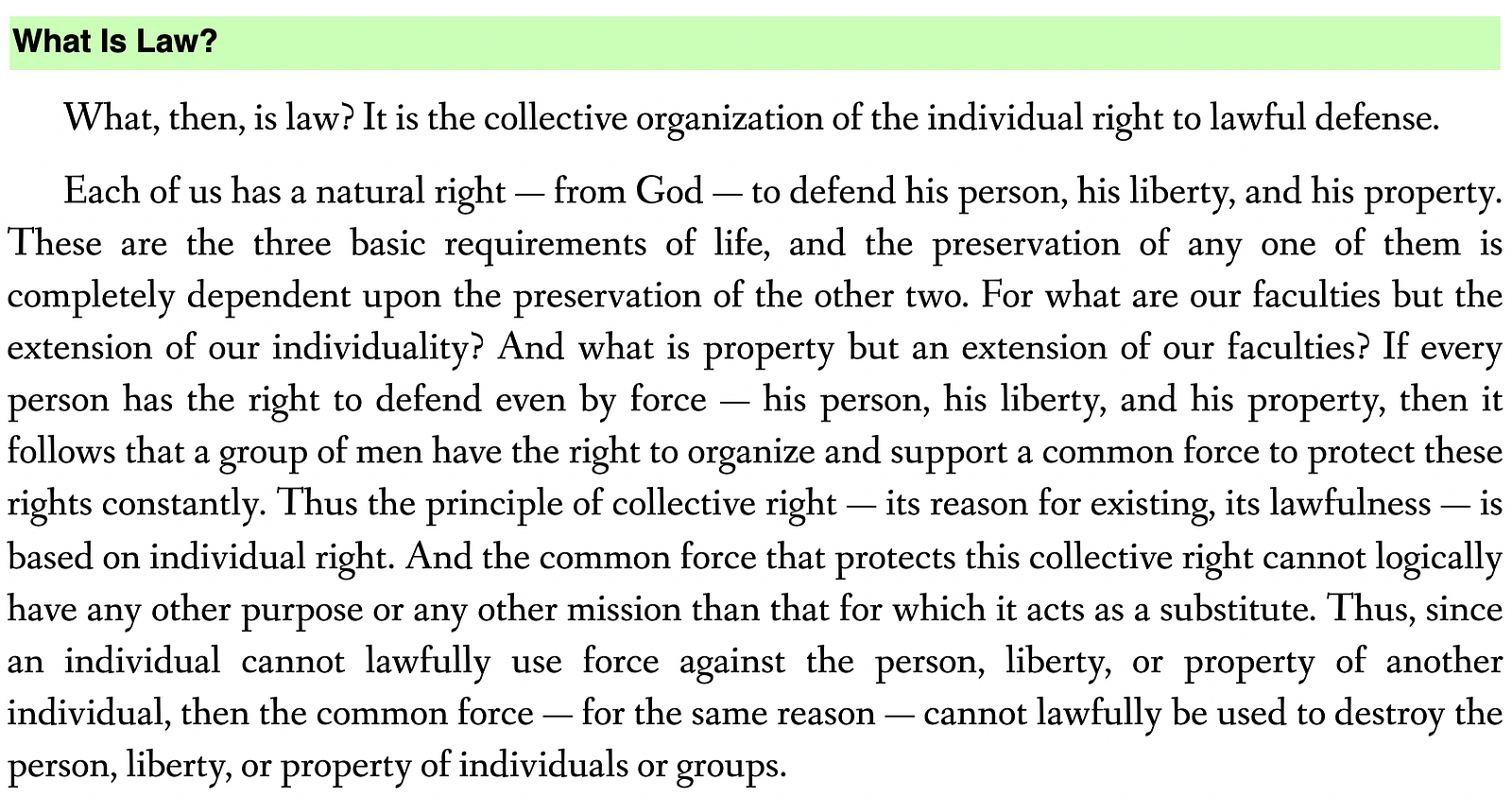
Bastiat is, however, best known for his Parable of the Broken Window. The allegory concerns James Goodfellow, his errant son, their community, and an enterprising glazier — a fitter of glass into windows and doors.
As errant sons are wont to do, windows break, and the Goodfellow family summons the town’s glazier. After performing his services, the glazier thanks the young Goodfellow for his father’s six francs. The community consoles the senior Goodfellow, he has supported the glazier’s trade which would not exist should a window stay unbroken.
Is it not then true that younger Goodfellow has helped the local economy?
As with much of his work, Bastiat scoffs.
While it is certainly true that the economic transaction does benefit both parties, the community’s assertion relies upon what is seen in that transaction. But the community logic entirely exempts what goes unseen — that the result of the transaction is to negate how Goodfellow’s six francs might instead have been spent in better ways, such as replacing his shoes.
Many modern-day Goodfellows would understand how this lesson applies, even outside economic terms such as Opportunity Cost — which Bastiat was sixty years in advance of demonstrating with his parable. How bills like HB 1298, HB 1476, same-sex marriage bans, and many other efforts currently under consideration around the United States fit within exactly this concept.
It is the unseen cost of a three-hour drive from North to South Hill for food.
It is the unseen cost of dating a man when you need to date a woman.
It is the unseen cost of being a female athlete when you need to be a man.
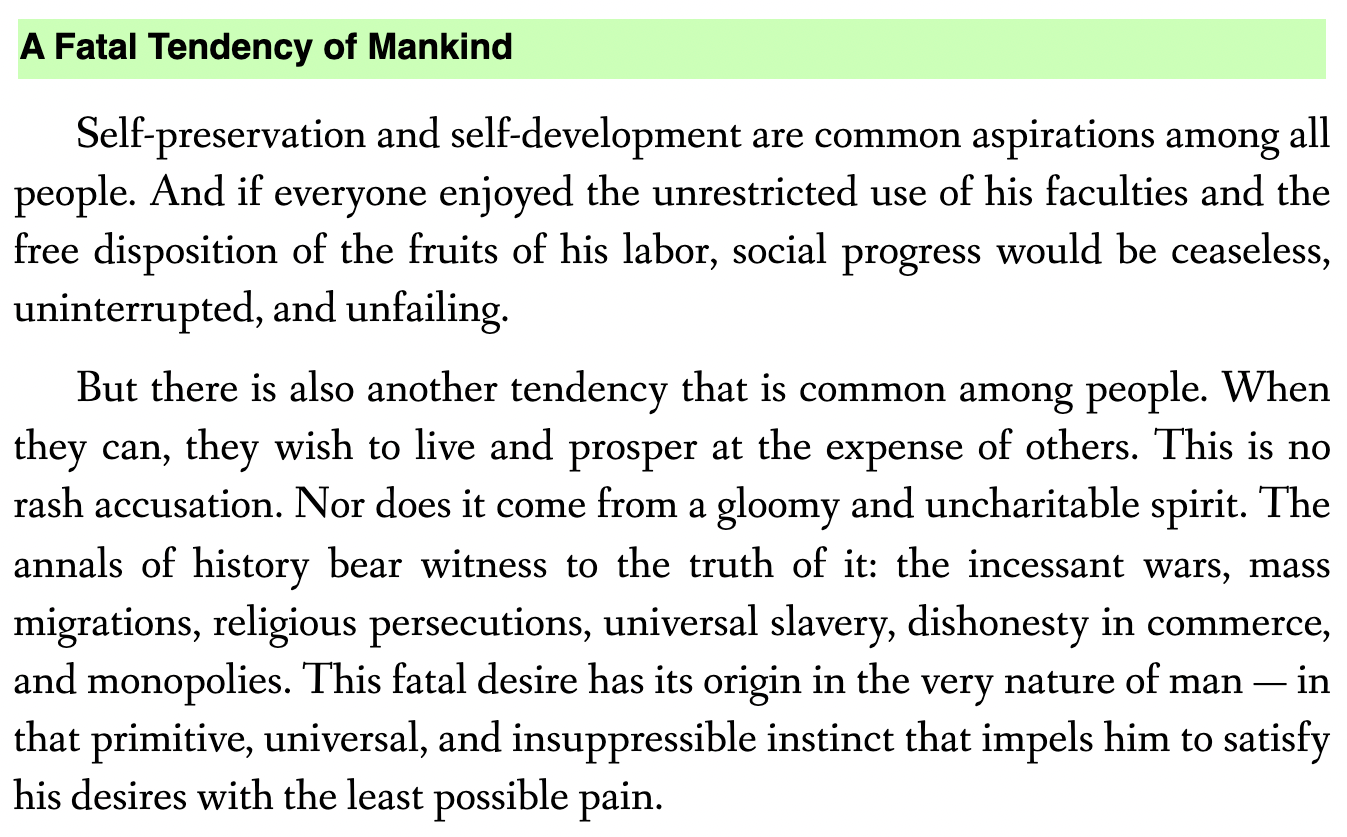
Considering their stance and support of these various pieces of North Dakotan legislation, I have but one confidence to impart to this Bastiat Caucus:
Should any posthumous visit from the Caucus’ favored economist present itself, it would, and with great personal fortune, only allow the Frenchman the opportunity to partake in a popular American pastime of spitting, with all the force of his lungs, upon the ground where any member of that Caucus walks.
Validation, A Birthday, & The Theft Of Carrie Evans’ Pride Flag
I called Jorden Laducer again on November 23rd, 2021. The Co-Executive Director of Magic City Equality reported that 2021's Pride celebrations were a success.

Jordan felt validated by the attendees.
“I actually had somebody that came up to me that said they were very happy this was available to them. They recently came out and they never knew that there was such a large community in Minot and that there was so much love for the LGBTQ2+. They thanked us for all the work and advocacy that we do.” — Jorden Laducer
But not everything is going well in Minot. One year after Carrie Evans delivered her speech, someone stole her Pride Flag. No, not the Pride Flag that the City of Minot refuses to acknowledge because of some shady policy work. That Pride Flag was never her responsibility.
It is a Pride Flag that Carrie’s family would have seen when attending her birthday this summer. A flag they would observe hanging from the porch at what her brother Shane describes as a rescue zoo Evans calls home.
Carrie believes that the flag has been stolen and additional security measures have been taken. While an authentic Bastiat may disapprove of such broken economic transactions, Gilbert Baker — the creator of the Pride Flag who passed away the same year Carrie returned home to Minot — would have believed it to be a furtherance of his effort to represent everyone’s right to find, keep, and show love in this world.
Gilbert would want whoever stole Carrie’s flag to fly it.
Part One: The Story of Carrie Evans’ Celebrated Rainbow Flag Defense
Part Two: How a North Dakota LGBTQ+ Community Supported Carrie Evans
Donation Links:
Magic City Equality, the Evans4Minot Campaign, & Youthworks.
My Editors:
James Finn, Elise Nardi, Tedd Hawks, Johnny Gilmour & Allison Palmer ❤️
Originally published on Medium.